Imagine introducing new technology to improve productivity, restructuring departments to reduce costs, or expanding into a new market. These decisions may look promising on paper. But what happens when employees resist the changes, managers struggle to adapt, or customers experience service disruptions? This is why organizations need a structured change management process.
Successful organizational change is not simply about introducing new systems or policies. It is about preparing people, managing the transition, and making sure improvements last.
Whether you operate a small business or a large organization, understanding how change management works can help you make better decisions and reduce unnecessary risks.
What Is the Change Management Process?
The change management process is a structured approach that helps organizations move from their current way of working to a desired future state.
It involves planning, communicating, implementing, and monitoring changes while supporting the people affected by them.
Changes can involve new technology, business strategies, leadership structures, company policies, workplace culture, or operational procedures.
For example, a company replacing its manual accounting system with digital software must do more than purchase the technology. Employees need training, managers must understand the new processes, and the business must monitor whether the system improves efficiency.
The goal is to make changes successful without creating unnecessary disruption.
According to Prosci’s change management methodology, effective change management involves preparing, equipping, and supporting individuals so they can adopt and sustain new ways of working.
Why Is Change Management Important for Businesses?
Change affects people, processes, and business performance. Without proper planning, even a useful business decision can create confusion.
A structured approach helps organizations:
- Reduce resistance: Employees are more likely to support changes when they understand why they are happening.
- Improve communication: Everyone receives clear information about new responsibilities and expectations.
- Protect productivity: Proper planning and training help reduce interruptions during transitions.
- Control risks: Businesses can identify challenges before they become serious problems.
- Achieve business objectives: Progress can be measured against clear targets.
- Build adaptability: Employees become better prepared to handle future changes.
For companies entering competitive markets, these benefits are especially important.
A business consultant in Turkey can help organizations assess operational challenges, plan strategic improvements, and manage transitions when expanding or restructuring their operations.
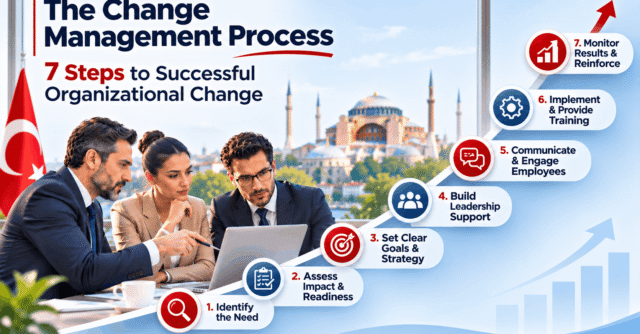
The Change Management Process: 7 Steps to Successful Organizational Change
Every organization has different needs.
However, the following seven steps provide a practical framework for planning and managing successful change.
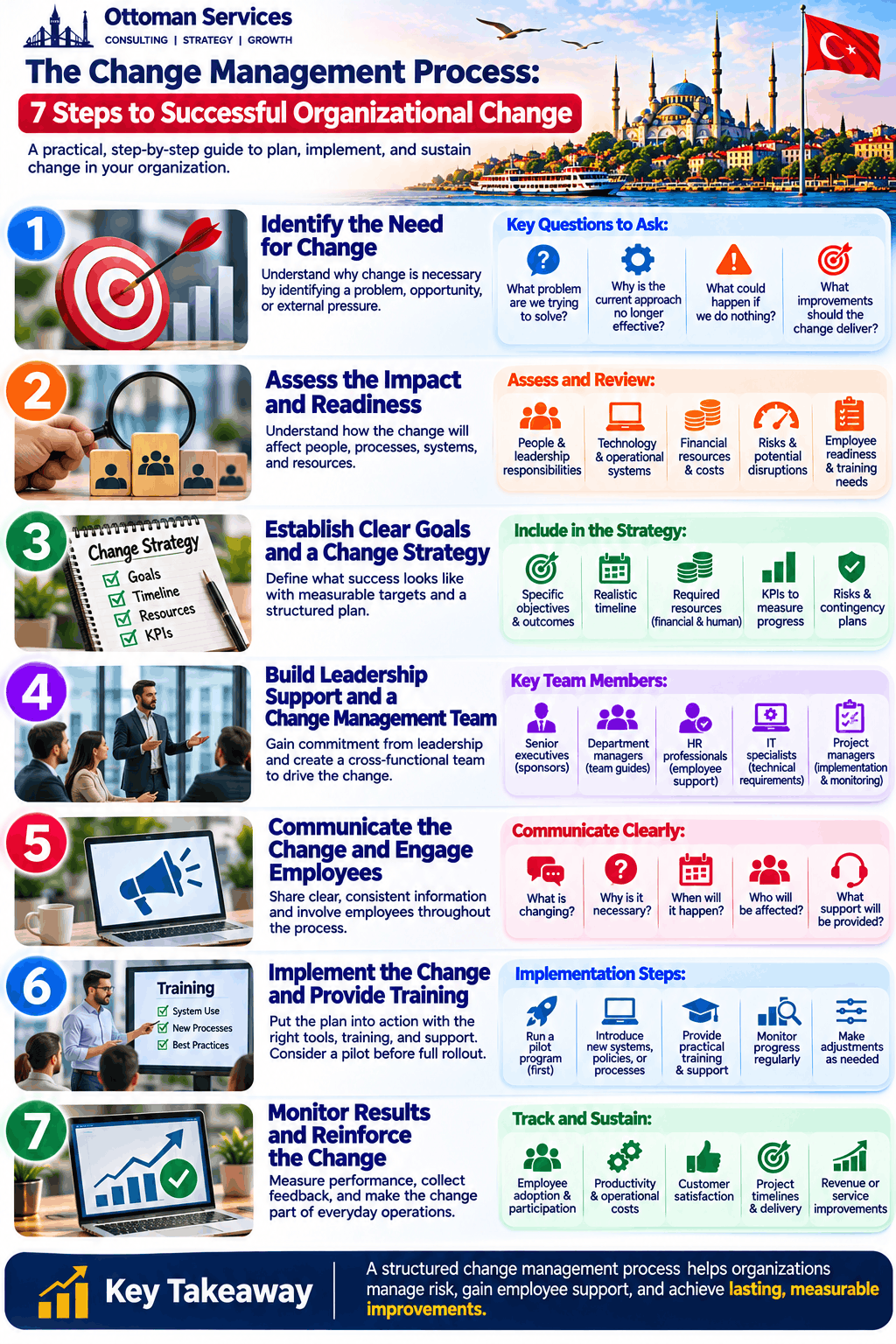
1. Identify the Need for Change
The first step is understanding why change is necessary.
Businesses should identify the problem, opportunity, or external pressure that requires action. Without a clear reason, employees may struggle to understand the purpose of a new initiative.
For example, declining sales may indicate that a company needs to review its marketing strategy.
Rising operational costs may require process improvements, while changing customer expectations may encourage investment in digital services.
Start by asking:
- What problem are we trying to solve?
- Why is the current approach no longer effective?
- What could happen if we do nothing?
- What improvements should the change deliver?
A clearly defined reason creates a foundation for the entire change management process.
2. Assess the Impact and Readiness of the Organization
Before introducing changes, understand how they will affect the business and its employees.
A new system may require employees to learn different skills. A department restructuring may change reporting relationships.
Expanding into another market may require additional resources and regulatory preparation.
Assess the following areas:
- Employees, departments, and leadership responsibilities
- Existing technology and operational systems
- Financial resources and implementation costs
- Potential risks and business disruptions
- Employee readiness and training requirements
This assessment helps decision-makers understand where additional support is needed.
For example, small business consulting Turkey services can help smaller organizations evaluate their available resources and identify practical improvements before committing to major operational changes.
3. Establish Clear Goals and a Change Strategy
Once the organization understands the need and potential impact, it should define what success looks like.
Avoid vague objectives such as improving performance or increasing efficiency. Instead, establish measurable targets.
For example, a business introducing a new customer relationship management system may aim to reduce response times by 20% within six months.
A change strategy should include:
- Specific objectives and expected outcomes
- A realistic implementation timeline
- Required financial and human resources
- Key performance indicators (KPIs)
- Potential risks and contingency plans
Clear goals give employees and managers a shared direction. They also make it easier to evaluate whether the change is delivering the expected results.
4. Build Leadership Support and a Change Management Team
Organizational change requires commitment from leadership.
Employees are more likely to trust a new initiative when senior managers actively support it. Leaders should explain the reasons for change, demonstrate commitment, and provide the resources needed for implementation.
Create a team with representatives from relevant departments. Assign clear responsibilities so everyone understands their role.
The team may include:
- Senior executives who approve and sponsor the change
- Department managers who guide their teams
- Human resource professionals who support employees
- IT specialists who manage technical requirements
- Project managers who monitor implementation
A business consultant in Turkey can also provide independent guidance, coordinate planning activities, and help management evaluate complex organizational decisions.
5. Communicate the Change and Engage Employees
Poor communication is one of the biggest reasons employees resist organizational change.
People want to understand how a decision affects their responsibilities, working environment, and future opportunities. Simply announcing a new policy or system is not enough.
Create a communication plan that explains:
- What is changing?
- Why is the change necessary?
- When will it happen?
- Who will be affected?
- What support will employees receive?
Use team meetings, emails, training sessions, and internal communication channels to share updates.
Encourage employees to ask questions and express concerns. Their feedback may reveal practical problems that management has overlooked.
When employees feel included, they are more likely to participate in the transition.
6. Implement the Change and Provide Training
Now it is time to put the strategy into action.
However, implementation should not happen without preparation. Employees need the knowledge, tools, and support required to work under the new system.
Depending on the initiative, implementation may involve introducing new software, updating policies, restructuring teams, or changing operational procedures.
Consider starting with a pilot program before applying the change across the entire organization. A smaller trial can reveal technical problems, training gaps, and unexpected costs.
Provide practical training and access to support. Monitor progress regularly and make adjustments when necessary.
Businesses operating in specialized industries should also consider their market requirements.
For example, tourism consulting Turkey may involve helping tourism businesses adapt to changing visitor expectations, digital booking systems, service standards, and seasonal demand.
7. Monitor Results and Reinforce the Change
The final step is making sure the change delivers lasting results.
A project is not successful simply because a new system has been installed or a new policy has been announced. Employees must actually adopt the new approach, and the organization must achieve its intended objectives.
Measure performance using the KPIs established earlier.
For example, monitor:
- Employee adoption and participation rates
- Productivity and operational costs
- Customer satisfaction
- Project completion timelines
- Revenue or service improvements
Collect feedback and address problems quickly. Recognize employees who support the transition and provide additional training where needed.
Once the new approach becomes part of everyday operations, assign responsibility for maintaining it. This helps prevent employees from returning to outdated practices.
People Also Ask: Common Questions About the Change Management Process
What Are the 5 Steps of the Change Management Process?
A simplified five-step change management process includes identifying the need for change, planning the transition, communicating with stakeholders, implementing the change, and monitoring the results. Organizations may use more detailed frameworks, but these five stages cover the main activities required to manage a transition.
What Are the 7 Steps of Change Management?
The seven steps are identifying the need for change, assessing organizational readiness, establishing goals, building leadership support, communicating with employees, implementing the change, and monitoring results. Together, they help businesses manage transitions in a structured and measurable way.
What Are the 4 Types of Change Management?
Four commonly discussed types of organizational change include strategic change, structural change, technological change, and people-focused change. Strategic change affects business direction, structural change modifies roles or departments, technological change introduces new tools or systems, and people-focused change addresses workplace culture, skills, and employee behaviour.
Why Do Employees Resist Organizational Change?
Employees may resist change because they fear losing their jobs, feel uncertain about new responsibilities, lack the necessary skills, or do not understand why the change is happening. Clear communication, leadership support, employee participation, and proper training can help reduce resistance.
6 Frequently Asked Questions About Change Management
1. How Long Does the Change Management Process Take?
It depends on the size and complexity of the change. A small process improvement may take a few weeks, while a major organizational restructuring or technology transformation can take several months or longer.
2. Who Is Responsible for Managing Organizational Change?
Senior leaders usually sponsor the initiative, while managers, project teams, and employees help implement it. External consultants may also provide guidance when specialist knowledge or independent support is required.
3. What Happens If a Change Management Plan Fails?
A failed plan can lead to employee resistance, wasted resources, lower productivity, and missed business objectives. Organizations should review what went wrong, gather feedback, identify weaknesses, and adjust the implementation strategy.
4. How Can Businesses Measure the Success of Change Management?
Businesses can measure success through employee adoption rates, productivity, customer satisfaction, operational costs, project timelines, and achievement of strategic objectives. The right KPIs depend on the purpose of the change.
5. Is Change Management Only Necessary for Large Companies?
No. Small businesses also need change management when introducing new technology, hiring employees, expanding operations, or changing business strategies. A simple and well-planned approach can prevent costly mistakes.
6. Can a Business Consultant Help With Change Management?
Yes. A business consultant can assess organizational challenges, develop a change strategy, support leadership decisions, identify risks, and help monitor implementation. The level of support depends on the organization’s goals and available resources.
Conclusion: Prepare Your Business for Successful Change
Change is an essential part of business growth. However, introducing new strategies without preparing employees, assessing risks, and measuring results can create unnecessary challenges.
A structured change management process helps organizations understand why change is needed, prepare their teams, implement improvements, and maintain long-term progress.
Whether you are restructuring an established company, improving operations, or exploring new opportunities in Turkey, the right guidance can make the transition more manageable.
Ottoman Services supports organizations with business consulting and strategic guidance to help them navigate challenges, improve operations, and pursue sustainable growth.
Ready to prepare your organization for its next stage of development? Book a consultation with Ottoman Services today and discuss how a structured change management strategy can help your business move forward with confidence.