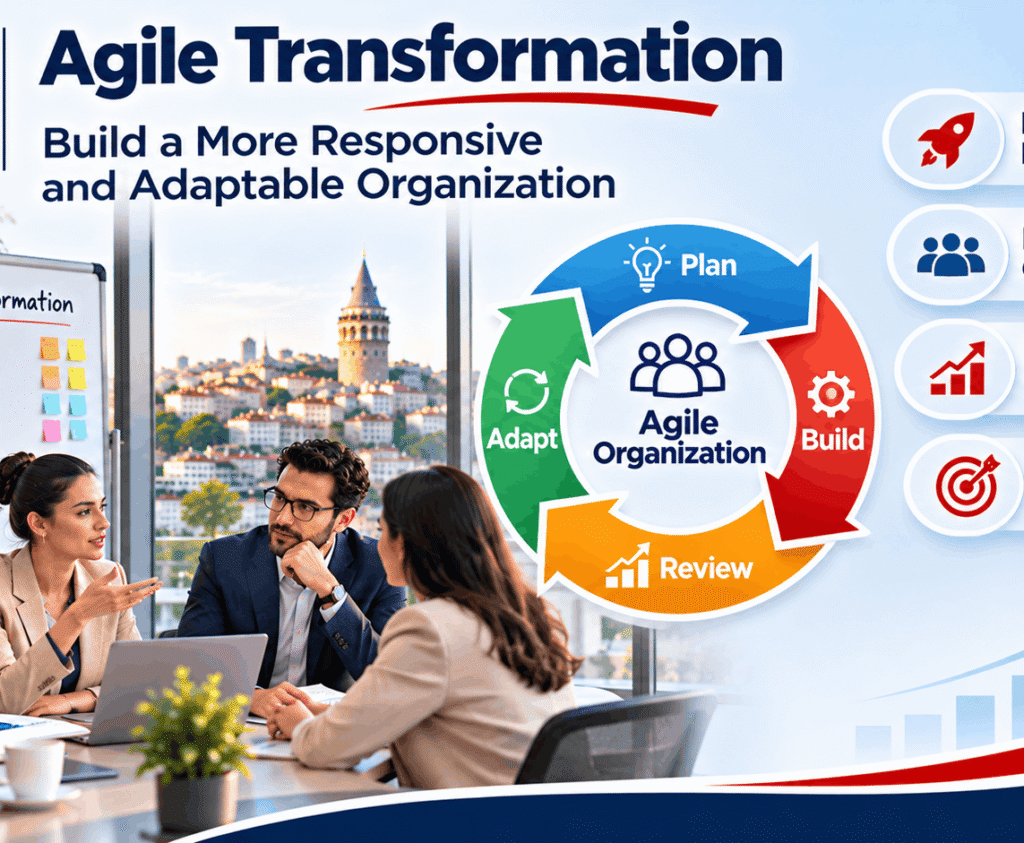
A business that takes months to respond to a changing market may already be losing customers to competitors that can adapt in weeks. Customer expectations evolve, technology advances, and economic conditions shift. For companies operating in Turkey’s competitive business environment, the ability to respond quickly is becoming an important part of long-term success.
However, becoming more flexible requires more than introducing new software or asking employees to attend Agile training. It involves changing how people collaborate, how leaders make decisions, and how organizations deliver value.
This is where agile transformation becomes important. By adopting flexible working methods, improving communication, and empowering teams, Turkish companies can build organizations that respond to challenges more effectively.
With the right business transformation strategy, businesses can become more adaptable without losing control of their operations.
What Is Agile Transformation?
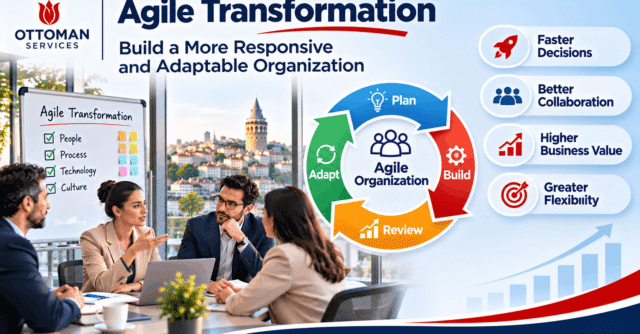
Agile transformation is the process of changing an organization’s culture, structure, leadership approach, and workflows to make it more responsive to changing business needs.
Traditional organizations often depend on fixed annual plans, departmental structures, and lengthy approval processes.
These systems can provide consistency, but they may also slow down decisions when circumstances change.
An agile organization works differently. Teams collaborate across departments, prioritize important tasks, review progress frequently, and adjust their plans based on feedback.
Agile transformation is not limited to software development. It can support manufacturing, banking, tourism, logistics, retail, and professional services.
For example, a Turkish manufacturing company may use cross-functional teams to address production delays. A tourism business may review customer feedback more frequently to improve its services.
A financial institution may use shorter planning cycles to respond to changing customer expectations.
The objective is not to make every process faster. It is to help the organization make better decisions and deliver value with less unnecessary delay.
Why Do Turkish Companies Need Agile Transformation?
Turkey’s business environment includes established industrial groups, growing technology companies, international investors, and small and medium-sized enterprises.
These organizations operate in markets where customer expectations, competition, technology, and costs can change quickly.
Rigid operating models can make it difficult to respond to these developments. Agile transformation offers a practical way to improve organizational flexibility.
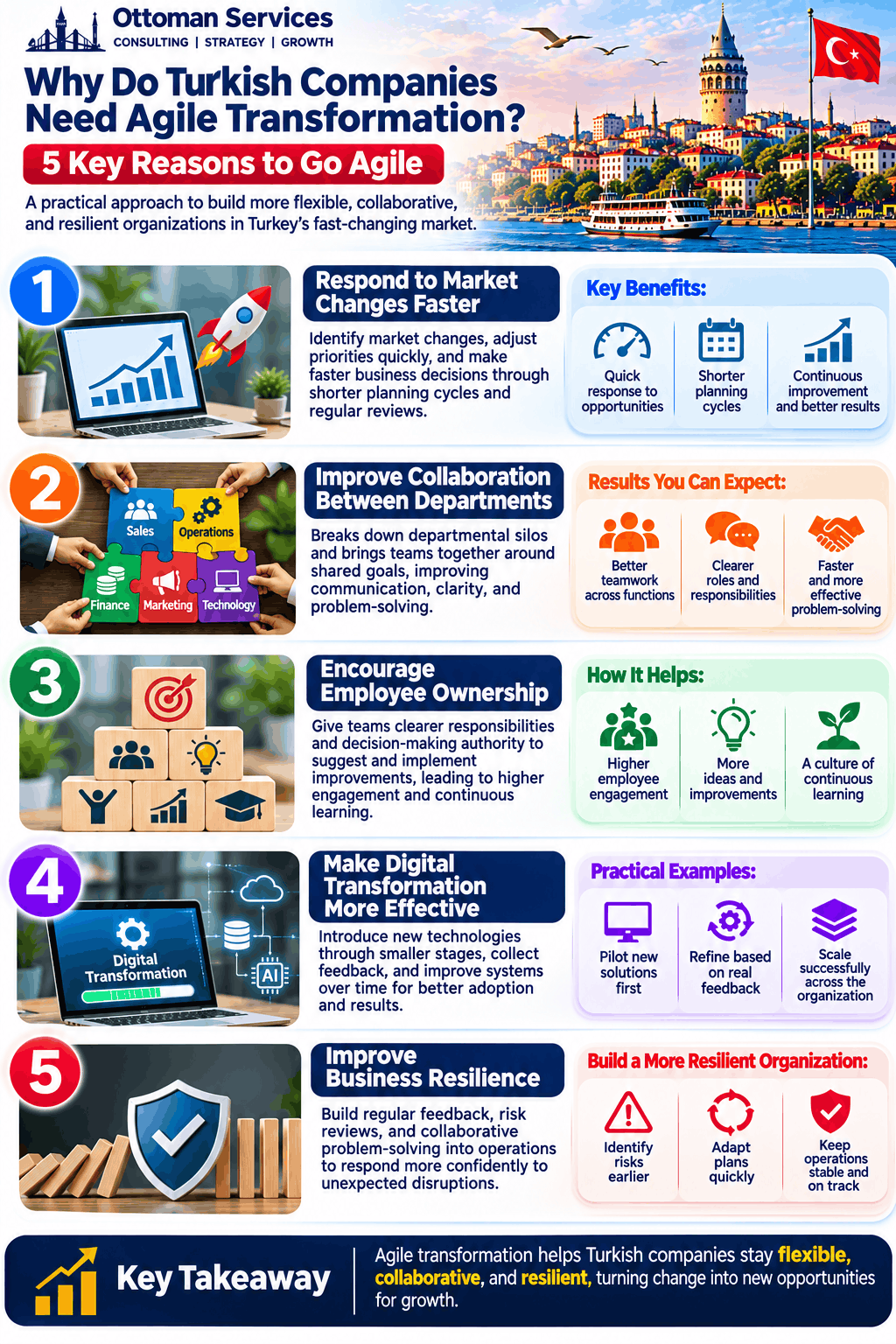
Here are five reasons companies should consider it.
1. Respond to Market Changes Faster
Businesses need to identify market changes and adjust their priorities before opportunities disappear.
Agile working methods encourage shorter planning cycles and regular performance reviews.
Instead of waiting until the end of a long project, teams can evaluate progress and make adjustments throughout implementation.
For Turkish companies competing internationally, this flexibility can support faster product development, improved customer service, and more responsive business decisions.
2. Improve Collaboration Between Departments
Departmental silos often create delays. Sales, finance, operations, marketing, and technology teams may work toward different priorities, even when they contribute to the same business objective.
Agile transformation encourages employees from different departments to collaborate around shared goals.
This improves communication, clarifies responsibilities, and reduces unnecessary handovers.
Teams can identify problems earlier and resolve them together instead of passing issues between departments.
3. Encourage Employee Ownership
Employees often understand operational problems better because they deal with them every day.
However, excessive approval requirements can prevent them from suggesting or implementing improvements.
Agile organizations give teams clearer responsibilities and appropriate decision-making authority. Managers provide direction, remove obstacles, and monitor results instead of controlling every small activity.
This approach can improve employee engagement and encourage continuous learning.
4. Make Digital Transformation More Effective
Investing in technology does not automatically improve business performance. Companies must also review the processes and responsibilities surrounding that technology.
Agile transformation helps businesses introduce digital solutions through smaller implementation stages, collect feedback, and improve systems over time.
For example, a logistics company introducing a new inventory management platform can test it within one operational unit before expanding it across the organization.
5. Improve Business Resilience
Unexpected disruptions can expose weaknesses in traditional operating models. Businesses with poor communication, unclear responsibilities, and slow decision-making may struggle to respond.
Agile organizations build regular feedback, risk reviews, and collaborative problem-solving into their operations.
These practices can help companies identify challenges earlier and adjust their plans when necessary.
How Can Turkish Companies Implement Agile Transformation?
A successful transformation requires a structured approach. Companies should avoid changing every department simultaneously without understanding their current challenges.
The following steps provide a practical starting point.
Step 1: Assess Existing Business Processes
Begin by identifying the operational problems that prevent the organization from responding effectively.
Review decision-making structures, communication channels, project delivery times, employee responsibilities, and customer feedback.
Ask questions such as:
- Which processes create unnecessary delays?
- Where do departments struggle to collaborate?
- Which decisions require too many approvals?
- Are employees clear about their responsibilities?
- How quickly can the business respond to customer feedback?
This assessment creates a baseline for the transformation and helps leadership identify priority areas.
Step 2: Establish Clear Transformation Objectives
Agile transformation should support measurable business goals rather than become an isolated management initiative.
A company might aim to reduce project delivery time, improve customer satisfaction, shorten approval processes, or increase collaboration between departments.
Set measurable indicators before implementation. These may include delivery lead time, customer response time, defect rates, employee engagement, or the percentage of projects meeting their objectives.
Clear objectives help employees understand why the transformation matters.
Step 3: Start With a Pilot Project
Instead of restructuring the entire organization immediately, select one department, product, or business process for an initial pilot.
A manufacturing company could test agile practices in production planning. A financial services business could introduce cross-functional teams for a customer onboarding project.
Observe how employees respond, identify obstacles, and document lessons.
Starting small allows leadership to improve the operating model before expanding it across the organization.
Step 4: Introduce Suitable Agile Methods
Different businesses need different approaches. Scrum can help teams manage work through short, structured cycles, while Kanban provides a visual way to manage tasks and identify workflow bottlenecks.
Some organizations may benefit from a hybrid model that combines agile practices with traditional project management and governance.
The objective is to select methods that suit the work, regulatory requirements, and organizational structure.
Copying another company’s framework without considering its own needs can create unnecessary complexity.
Step 5: Prepare Employees and Managers for Change
Employees need to understand how their responsibilities may evolve. Managers must also learn to support empowered teams, encourage collaboration, and make decisions using reliable performance information.
Provide practical training, coaching, and regular feedback sessions.
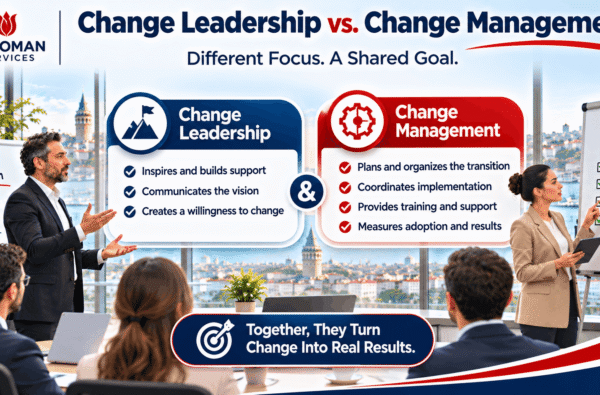
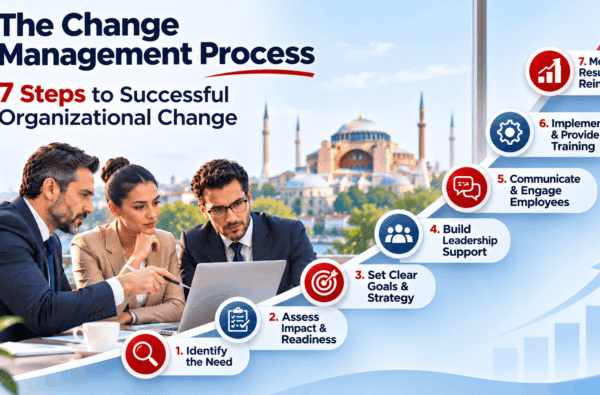
This is where the change management process becomes essential.
Communicate the reasons for transformation, involve employees in planning, address concerns, and provide ongoing support.
A transformation is more sustainable when employees understand and participate in it.
Step 6: Measure Results and Improve Continuously
Agile transformation is not a one-time project. Organizations should regularly review performance and adjust their working methods.
Compare results against the original objectives. Identify what is working, where delays remain, and whether employees have the authority and resources they need.
Use these findings to improve workflows and refine team structures. Successful practices can then be expanded to other departments.
What Can Turkish Companies Learn From Existing Agile Transformations?
Several organizations operating in Turkey provide useful examples of how agile principles can work in different environments.
- Allianz Turkey pursued an enterprise-wide agile transformation after identifying departmental silos and slow cross-functional decision-making. Its approach included piloting agile practices in motor insurance before expanding the model to additional business areas.
- Kuveyt Türk Bank used a structured approach to improve project and portfolio management. Its transformation included clearer responsibilities, improved prioritization, and a hybrid model that accommodates different project delivery needs.
- SOCAR Türkiye introduced an agile business model across industrial operations and later extended agile practices to administrative functions. Its annual reporting describes the importance of cross-functional teams, shared priorities, and employee empowerment.
These examples demonstrate that agile transformation does not require every company to follow the same framework.
The most suitable approach depends on business objectives, organizational culture, and operational requirements.
What Role Does Business Consulting Play in Agile Transformation?
Organizational change can be difficult to manage without an objective assessment of existing processes and capabilities.
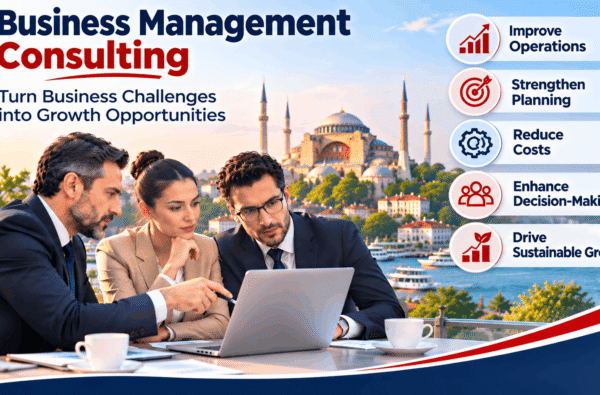
Professional business consulting in Turkey can help organizations identify operational weaknesses, evaluate transformation opportunities, and develop practical implementation plans.
Consultants can support businesses by:
- Reviewing existing organizational structures and workflows.
- Identifying barriers to collaboration and decision-making.
- Aligning transformation objectives with business strategy.
- Supporting change management and employee communication.
- Establishing performance indicators to measure progress.
- Evaluating results and recommending improvements.
External advisory support can be particularly useful when companies need to coordinate changes across several departments or balance flexibility with existing governance requirements.
However, consultants should complement internal leadership rather than replace it. Long-term success depends on the organization’s ability to maintain and improve its new working practices.
People Also Ask: Common Questions About Agile Transformation
What is the difference between Agile and agile transformation?
Agile refers to principles and methods for managing work through collaboration, feedback, and continuous improvement. Agile transformation is the broader organizational change required to apply these principles across teams, leadership, processes, and business operations.
How long does agile transformation take?
There is no universal timeline. A pilot project may demonstrate early improvements within a few months, while organization-wide cultural and operational changes can take several years. Progress depends on company size, leadership commitment, employee readiness, and the complexity of existing processes.
Can small businesses benefit from agile transformation?
Yes. Small businesses can benefit from shorter planning cycles, clearer priorities, faster communication, and more direct employee involvement. They do not need complex frameworks or large transformation budgets to begin improving their flexibility.
Is agile transformation only suitable for technology companies?
No. Agile practices can support manufacturing, finance, tourism, logistics, retail, and other industries. The methods should be adapted to the organization’s operational requirements and regulatory responsibilities.
Frequently Asked Questions
1. What are the main benefits of agile transformation?
The main benefits include faster decision-making, improved collaboration, greater employee ownership, continuous improvement, and better responsiveness to customer needs.
2. What are the biggest challenges of agile transformation?
Common challenges include resistance to change, limited leadership support, unclear responsibilities, insufficient training, and difficulty coordinating work across departments.
3. Does agile transformation require new technology?
Not necessarily. Technology can support collaboration and workflow visibility, but transformation begins with people, processes, and leadership. Companies should identify their needs before investing in new tools.
4. Which agile framework should a Turkish company choose?
The right framework depends on the company’s goals and working environment. Scrum may suit structured project teams, Kanban can help manage continuous workflows, and hybrid approaches may be appropriate for organizations with formal governance requirements.
5. How can companies measure agile transformation success?
Businesses can monitor delivery time, customer satisfaction, project outcomes, workflow efficiency, employee engagement, and the ability to respond to changing priorities. Measurements should reflect actual business objectives.
6. Why is change management important during agile transformation?
Change management helps employees understand new responsibilities, adapt to different working methods, and participate in organizational improvements. Without proper communication and support, even well-designed agile initiatives may struggle to become part of everyday operations.
Build a More Flexible Organization With Ottoman Services
Agile transformation is not simply about adopting a new project management framework. It is about creating an organization that can learn, collaborate, and respond to change without losing sight of its long-term objectives.
For Turkish companies, the journey should begin with a clear understanding of existing challenges, realistic transformation goals, and a practical implementation strategy.
Ottoman Services supports organizations through business consulting, strategic advisory, and business transformation planning. Whether your company wants to improve operational efficiency, strengthen internal collaboration, or prepare for changing market conditions, the right guidance can help you move forward with greater clarity.
Book a consultation with Ottoman Services today and explore how your organization can become more flexible, resilient, and ready for sustainable growth.