Imagine your company is introducing new technology, restructuring departments, or changing its business strategy. The plan looks excellent on paper. The budget is approved, deadlines are set, and employees receive instructions. Yet, months later, teams are still following old habits, managers are struggling to get cooperation, and the transformation is losing momentum.
Why does this happen?
Because implementing change and leading people through change are two different responsibilities. Businesses need both change leadership and change management to turn new ideas into lasting results.
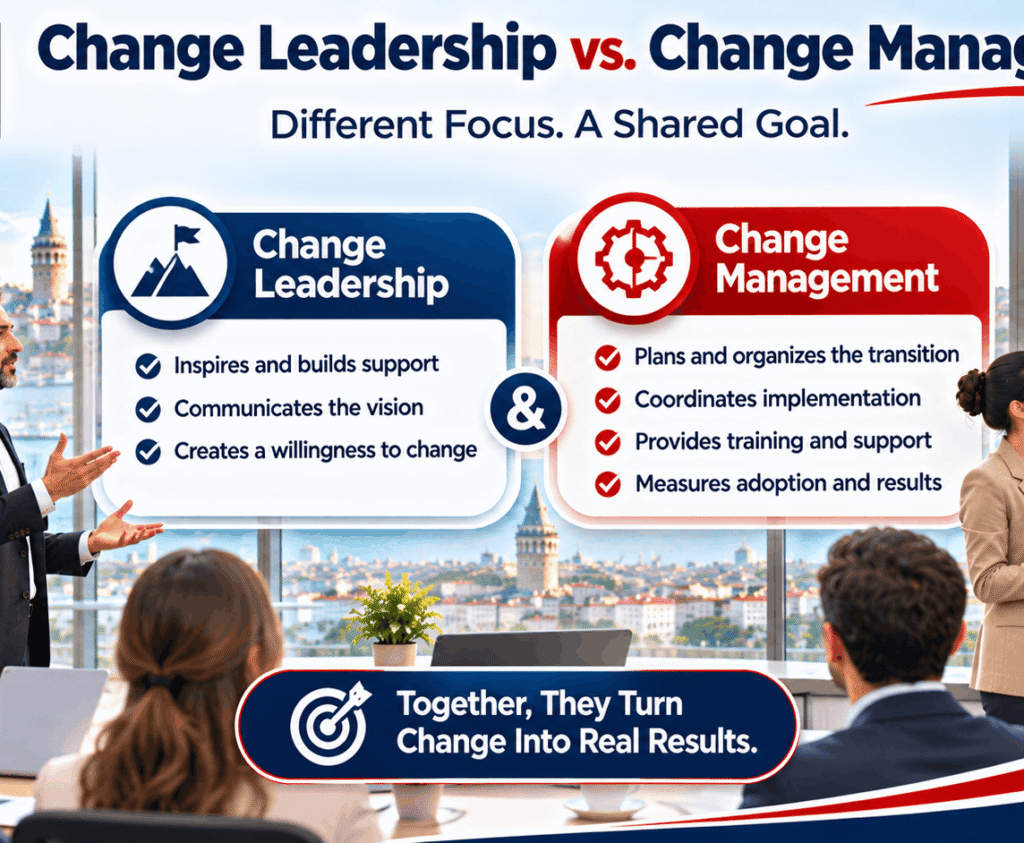
Although these terms are often used interchangeably, they serve different purposes. Change leadership creates direction, builds commitment, and inspires people to move forward.
Change management provides the structure, processes, and support needed to implement that change successfully.
Understanding the difference helps organizations avoid costly mistakes and build a workforce that is more prepared for transformation.
What Is the Difference Between Change Leadership and Change Management?
The main difference is their focus.
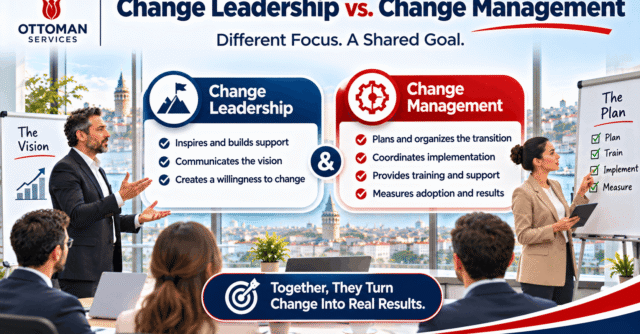
- Change leadership is about inspiring people to accept and support a new direction. It involves communicating a vision, building trust, encouraging innovation, and helping employees understand why change is necessary.
- Change management is about organizing and supporting the transition from the current situation to the desired future state. It involves planning activities, assigning responsibilities, communicating updates, providing training, and measuring adoption.
Consider a company planning to introduce an automated customer service system.
-
Change leadership explains why automation is important, communicates its long-term benefits, and encourages employees to embrace the new approach.
-
Change management organizes the implementation, schedules training, updates workflows, and helps employees learn how to use the system.
Both are necessary. Leadership creates the willingness to change, while management helps make the change happen.
Why Are Change Leadership and Change Management Important?
Businesses rarely remain successful by following the same processes indefinitely. New technologies, customer expectations, market conditions, and competition create pressure to adapt.
However, organizational change can create uncertainty. Employees may worry about new responsibilities, managers may struggle to coordinate departments, and customers may experience disruptions if implementation is poorly planned.
Change leadership and change management help organizations address these challenges.
Together, they can:
-
Improve employee understanding and participation.
-
Reduce confusion during organizational transitions.
-
Align departments around shared objectives.
-
Support smoother implementation of new processes.
-
Strengthen communication between leaders and employees.
-
Help businesses maintain productivity during transformation.
For companies operating in competitive markets, these capabilities can make business transformation more manageable and sustainable.
Change Leadership vs. Change Management: Key Differences
Although they support the same objective, their responsibilities differ in several important ways.
| Area | Change Leadership | Change Management |
|---|---|---|
| Primary focus | Vision and commitment | Planning and implementation |
| Main question | Why should we change? | How will we implement the change? |
| Approach | Inspirational and strategic | Structured and operational |
| Main responsibility | Building trust and motivating people | Coordinating activities and supporting adoption |
| Key activities | Communicating vision, influencing culture, encouraging participation | Training, planning, communication, monitoring progress |
| Desired outcome | People support the new direction | People adopt and sustain new ways of working |
1. Vision vs. Execution
Change leadership begins by explaining where the organization needs to go and why that direction matters.
Leaders communicate a compelling vision that connects organizational goals with employee interests. They help people understand the opportunities created by the proposed transformation.
Change management focuses on translating that vision into practical activities. It establishes timelines, identifies resources, assigns responsibilities, and monitors implementation.
Without leadership, employees may not understand why the change matters. Without management, the organization may struggle to turn its vision into measurable results.
2. Inspiration vs. Structure
Change leaders encourage people to participate in transformation. They build confidence, listen to concerns, and demonstrate commitment through their actions.
Change managers establish the systems that help employees adapt. These may include training sessions, communication plans, implementation schedules, feedback channels, and performance indicators.
For example, a company introducing a new organizational structure needs leaders who can explain the benefits of the change and managers who can coordinate new reporting relationships.
3. Long-Term Direction vs. Short-Term Milestones
Change leadership often considers the organization’s long-term direction. It encourages employees to think beyond immediate challenges and understand how transformation supports future growth.
Change management focuses on the activities and milestones required to reach that future state.
This includes monitoring progress, resolving implementation problems, and ensuring employees receive the support they need at each stage.
4. Cultural Transformation vs. Employee Adoption
Change leadership can influence organizational culture by encouraging new attitudes, behaviors, and ways of working.
Change management focuses on helping employees adopt specific changes in their daily responsibilities.
For example, a business that wants to build a customer-focused culture needs leaders who consistently demonstrate customer-first behavior.
It also needs managers who introduce practical service standards, employee training, and feedback systems.
Can Change Management Work Without Change Leadership?
Change management can coordinate activities without strong leadership, but the results may be limited.
A business might introduce new systems, provide employee training, and complete its implementation schedule.
However, employees may follow the new procedures without understanding their purpose or supporting the organization’s wider objectives.
This can lead to low engagement, resistance, and a return to old working habits.
Similarly, change leadership without effective management can create enthusiasm without execution. Employees may support a new vision but lack the training, resources, or clear instructions required to achieve it.
The strongest organizations combine both capabilities. They provide a clear reason for change and a practical path for achieving it.
How Can Businesses Combine Change Leadership and Change Management?
Organizations should treat leadership and management as complementary parts of one transformation strategy.
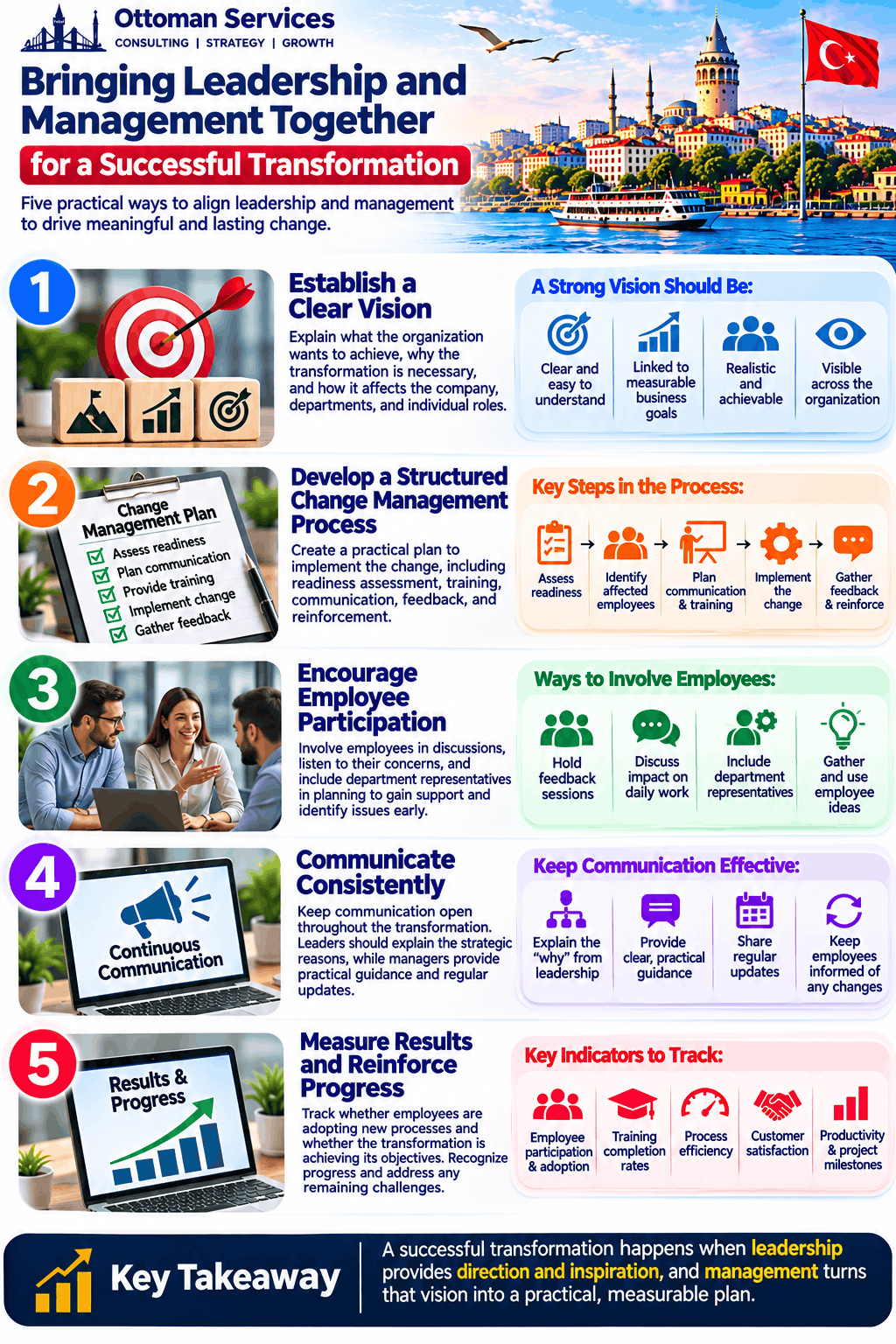
Here are five practical ways to bring them together.
1. Establish a Clear Vision
Senior leaders should explain what the organization wants to achieve and why the transformation is necessary.
The vision should be realistic, easy to understand, and connected to measurable business objectives.
Employees should understand how the proposed change affects the company, their departments, and their individual responsibilities.
2. Develop a Structured Change Management Process
Once the direction is established, managers should create a practical implementation plan.
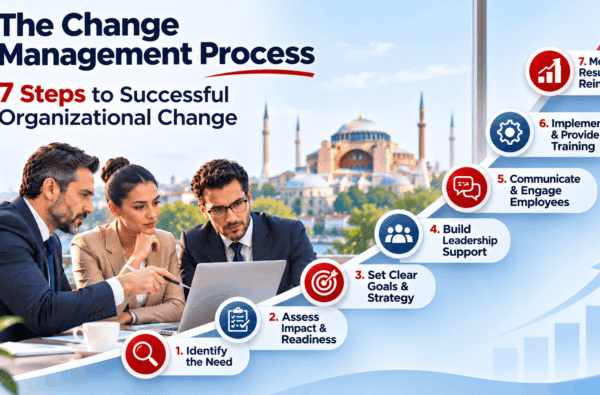
A structured change management process typically includes assessing readiness, identifying affected employees, planning communication and training, implementing the change, gathering feedback, and reinforcing new practices.
The plan should also define responsibilities, deadlines, resources, and performance indicators.
3. Encourage Employee Participation
Employees are more likely to support changes when they have opportunities to share concerns and contribute ideas.
Create feedback sessions, involve department representatives in planning, and encourage managers to discuss how proposed changes affect daily operations.
This helps leadership identify potential problems before they become major obstacles.
4. Communicate Consistently
Communication should continue throughout the transformation, not stop after the initial announcement.
Senior leaders should explain the strategic reasons behind the change. Department managers should provide practical guidance about new responsibilities and workflows.
Regular updates help employees understand progress and remain informed when plans need adjustment.
5. Measure Results and Reinforce Progress
Track whether employees are adopting new processes and whether the transformation is achieving its objectives.
Useful indicators may include employee participation, training completion, process efficiency, customer satisfaction, productivity, and project milestones.
Recognize progress, address remaining challenges, and make improvements where necessary.
What Role Does a Business Consultant Play in Organizational Change?
Managing organizational change can become complicated when several departments, teams, or business processes are involved.
A professional business consultant in Turkey can help organizations evaluate their current operations, identify barriers to transformation, and develop a practical strategy for moving forward.
Consultants may support businesses by:
-
Assessing organizational readiness for change.
-
Identifying operational inefficiencies and communication gaps.
-
Developing business transformation strategies.
-
Supporting change management planning.
-
Improving coordination between leadership and employees.
-
Establishing performance indicators to evaluate progress.
External advisory support can provide an objective perspective, particularly when internal teams are too occupied with daily responsibilities to evaluate wider organizational challenges.
However, consultants should work alongside company leadership and internal managers. Sustainable transformation requires commitment from the people responsible for running the organization.
For a useful overview of the people-focused side of organizational change, see Prosci’s guide to change leadership.
People Also Ask: Common Questions About Change Leadership and Change Management
What are the four types of organizational change?
Four common categories are strategic change, structural change, technological change, and cultural change. Strategic change affects business direction, structural change modifies roles or departments, technological change introduces new systems, and cultural change influences workplace values and behaviors.
What is the main goal of change leadership?
The main goal of change leadership is to create a clear vision, build employee commitment, and encourage people to support organizational transformation. It helps employees understand why change is necessary and motivates them to participate.
What is the main goal of change management?
Change management aims to help individuals and teams adopt new processes, systems, or responsibilities successfully. It uses structured planning, communication, training, and feedback to support the transition and achieve the intended outcomes.
Which comes first: change leadership or change management?
Change leadership often establishes the vision and direction first, while change management translates that direction into an implementation plan. In practice, both activities should continue together throughout the transformation.
Frequently Asked Questions
1. Are change leadership and change management the same?
No. Change leadership focuses on vision, motivation, and commitment, while change management focuses on planning, coordination, and employee adoption. Both contribute to successful organizational change.
2. Who is responsible for change leadership?
Senior executives, business owners, department heads, and other influential employees can demonstrate change leadership. Anyone who communicates the vision, builds trust, and encourages people to support transformation can contribute.
3. What skills are important for change leaders?
Important skills include communication, emotional intelligence, strategic thinking, decision-making, adaptability, and the ability to build trust. Effective change leaders should also listen to employee concerns and respond constructively.
4. What are the biggest challenges in change management?
Common challenges include employee resistance, poor communication, insufficient training, unclear responsibilities, limited resources, and weak leadership support.
5. How can businesses measure successful change management?
Businesses can monitor employee adoption, training participation, productivity, customer satisfaction, project completion, and operational performance. The right indicators depend on the objectives of the transformation.
6. Why should businesses hire a change management consultant?
A consultant can provide an objective assessment, identify implementation risks, develop a structured change strategy, and help coordinate transformation activities. This can be particularly valuable when a business is undergoing major operational or organizational changes.
Lead Organizational Change With Confidence
Successful transformation requires more than a well-designed plan. It requires leaders who can inspire people to move forward and managers who can turn that direction into practical results.
Change leadership builds the vision and commitment needed to move an organization forward. Change management provides the structure and support required to make that transition successful.
For businesses in Turkey, combining both approaches can help improve organizational performance, strengthen employee engagement, and prepare teams for future challenges.
At Ottoman Services, we support organizations through business consulting, strategic advisory, and business transformation planning.
Whether your company is restructuring its operations, introducing new technology, or preparing for long-term growth, the right guidance can make the transition more effective.
Book a consultation with Ottoman Services today and discover how your organization can lead change, manage transformation, and build a stronger foundation for sustainable growth.