
A business can have a talented team, reliable products, and loyal customers, yet still struggle to reach its full potential. Rising costs, inefficient operations, poor planning, and unclear business goals can slowly affect performance. But how can business owners identify what is going wrong and find the right solutions? Sometimes, the answer is an outside perspective. Business management consulting helps organizations understand their challenges, improve decision-making, and build strategies for sustainable growth.
Professional advisors examine how a company operates and recommend practical improvements based on its goals, resources, and market conditions.
Whether you manage a growing company, lead an established organization, or plan to expand into a new market, working with a business management consultant can help turn complex challenges into clear opportunities.
What Is Business Management Consulting?
Business management consulting is a professional advisory service that helps organizations improve their performance, solve operational problems, and achieve business objectives.
A consultant works with company leaders to understand existing challenges, review business processes, analyze information, and recommend suitable solutions.
Depending on the company’s needs, this may involve strategic planning, financial management, marketing, human resources, technology, or operational improvements.
For example, a company experiencing declining profits may assume that it needs more customers. However, a closer review might reveal that unnecessary expenses, poor pricing decisions, or inefficient workflows are affecting profitability.
A business management consultant helps identify the underlying problem instead of focusing only on its visible symptoms.
The objective is not to take control of a company. It is to give business owners the knowledge, direction, and support needed to make better decisions.
What Does a Business Management Consultant Do?
A business management consultant provides independent advice and practical support to improve how an organization operates.
Their responsibilities depend on the company’s challenges and the scope of the consulting engagement.
Common responsibilities include:
- Business performance analysis: Reviewing financial reports, operational processes, and performance indicators to identify weaknesses.
- Strategic planning: Helping leadership establish realistic objectives and long-term business priorities.
- Operational improvement: Finding ways to reduce waste, remove unnecessary steps, and improve productivity.
- Financial guidance: Reviewing budgets, expenses, resource allocation, and cost-control opportunities.
- Organizational development: Improving management structures, employee responsibilities, and internal communication.
- Technology adoption: Advising on digital tools and systems that can support business operations.
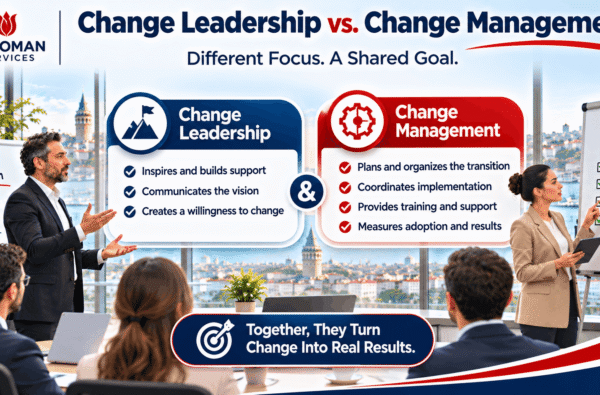
- Change management: Helping teams understand and adopt new strategies, systems, or working methods.
A good consultant does more than prepare recommendations.
They also help organizations understand how to apply those recommendations and measure their results.
7 Ways Business Management Consulting Improves Company Performance
Professional advisory services can influence several areas of a business.
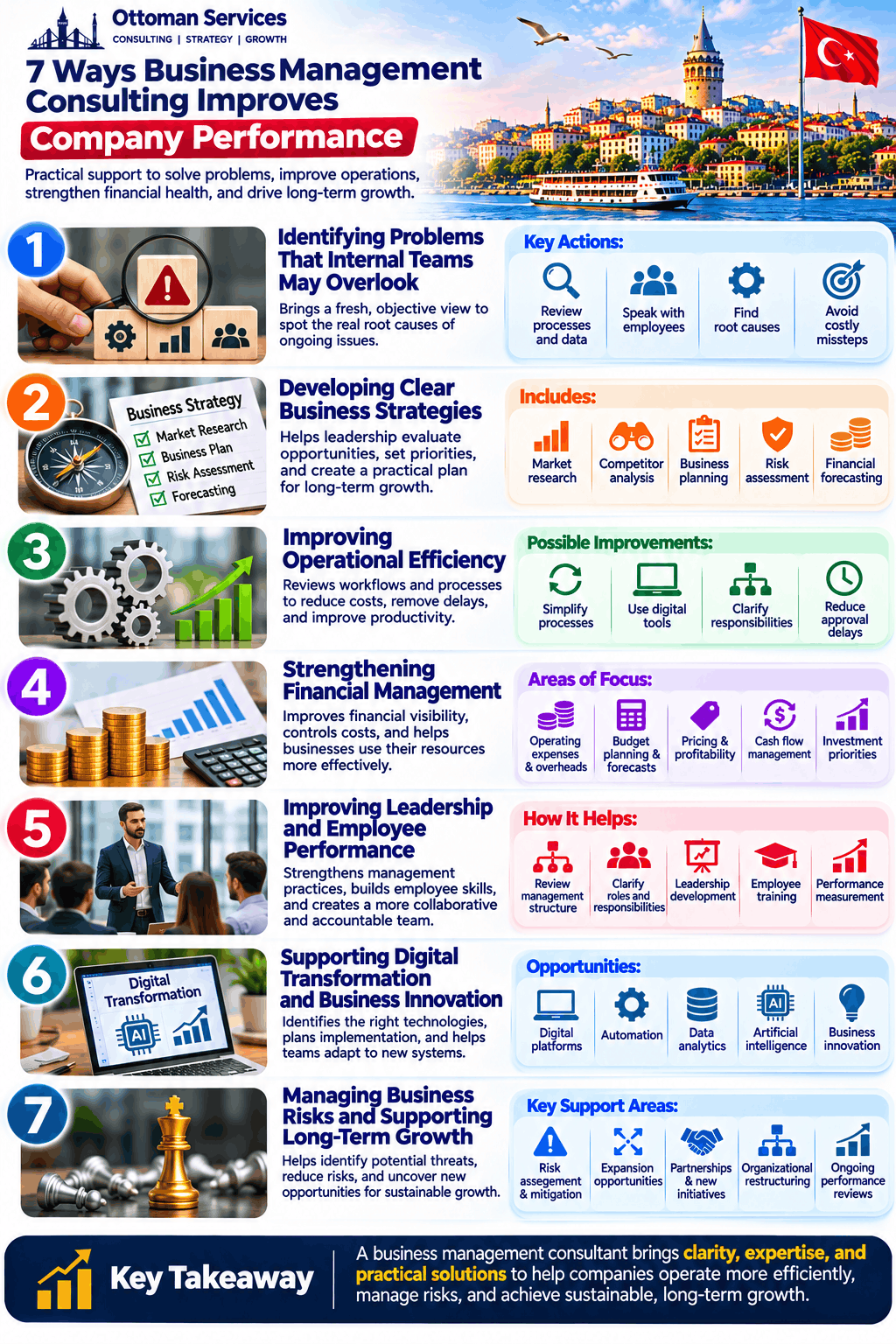
Here are seven important ways they can support better performance.
1. Identifying Problems That Internal Teams May Overlook
Business owners and managers spend much of their time handling daily responsibilities. As a result, they may overlook problems that have become part of their normal operations.
An external advisor brings a fresh perspective. They can review existing processes, speak with employees, examine performance data, and identify issues that require attention.
For example, delayed customer deliveries may not be caused by a shortage of staff. The real problem could be poor inventory planning or communication between departments.
Finding the root cause helps businesses avoid spending money on solutions that do not address the actual problem.
2. Developing Clear Business Strategies
Growth without direction can create unnecessary risks. Companies may invest in new products, enter unfamiliar markets, or expand their workforce without understanding whether these decisions support their long-term goals.
A business management consultant helps leadership evaluate opportunities and establish priorities.
This may include market research, competitor analysis, business planning, risk assessment, and financial forecasting.
A clear strategy gives managers a better understanding of where the business is heading, what resources are required, and how success should be measured.
3. Improving Operational Efficiency
Inefficient operations can increase costs and reduce customer satisfaction. Repeated tasks, unclear responsibilities, outdated systems, and unnecessary approval processes can slow down business activities.
Consultants review how work moves through an organization and identify opportunities to improve it.
For example, a company may reduce administrative delays by introducing digital reporting tools or simplifying its approval process.
These improvements can help employees use their time more effectively while allowing management to focus on higher-value activities.
4. Strengthening Financial Management
Revenue growth does not always mean a business is financially healthy. Companies must also manage expenses, cash flow, budgets, and investments carefully.
Business management consulting can help organizations understand where their money goes and identify areas where resources are being used inefficiently.
Professional advisors may review:
- Operating expenses and overhead costs
- Budget planning and financial forecasts
- Pricing and profitability
- Cash flow management
- Investment priorities
Better financial visibility helps business owners make informed decisions and prepare for unexpected challenges.
5. Improving Leadership and Employee Performance
Employees play an important role in company performance. However, unclear responsibilities, weak communication, and limited training can prevent teams from reaching their potential.
A consultant may review management structures, employee responsibilities, and internal communication practices.
They can also recommend leadership development, performance measurement systems, and employee training initiatives.
When employees understand their roles and business objectives, collaboration becomes easier and accountability improves.
6. Supporting Digital Transformation and Business Innovation
Technology continues to change how companies operate. Digital platforms, automation, data analytics, and artificial intelligence can create opportunities to improve productivity and customer experiences.
However, adopting technology without a clear plan can lead to unnecessary expenses and complicated workflows.
A consultant can help businesses identify suitable tools, evaluate implementation requirements, and prepare employees for new systems.
This is particularly valuable for companies that want to modernize operations without disrupting their existing activities.
7. Managing Business Risks and Supporting Long-Term Growth
Every business faces risks. These may involve changing market conditions, financial pressure, regulatory requirements, technology, or competition.
A management advisor helps identify potential threats and develop plans to address them.
They can also evaluate expansion opportunities, organizational restructuring, partnerships, and new business initiatives.
With better planning and regular performance reviews, businesses can respond to challenges more confidently and maintain progress over time.
When Should You Hire a Business Management Consultant?
Not every business needs external consulting support all the time. However, certain situations indicate that professional guidance may be valuable.
Consider hiring a consultant when:
- Business growth has slowed despite consistent efforts.
- Operating expenses continue to increase.
- Employees struggle with unclear responsibilities.
- Management decisions are not producing expected results.
- Your organization is preparing for expansion or restructuring.
- You want to introduce new technology or improve existing systems.
- Your business needs an objective review of its current strategy.
Companies entering unfamiliar markets may also benefit from professional guidance.
For example, a business consultant in Turkey can help organizations evaluate local opportunities, understand operational challenges, and plan their market-entry strategies.
How to Choose the Best Management Consultant Firm
Choosing the best management consultant firm requires more than comparing prices or reviewing attractive websites.
The right advisor should understand your business challenges and offer recommendations that are practical and relevant.
Consider these factors before making a decision:
- Relevant experience: Look for consultants with experience in your industry or the specific problem you want to solve.
- Clear methodology: Ask how they assess business performance, develop recommendations, and support implementation.
- Verifiable reputation: Review professional credentials, client references, and genuine testimonials.
- Transparent pricing: Understand the project scope, expected deliverables, fees, and additional costs.
- Measurable outcomes: Choose an advisor who can explain how progress and results will be evaluated.
- Communication: A successful consulting relationship requires open discussions, clear reporting, and mutual understanding.
The right partnership should strengthen your internal capabilities rather than create unnecessary dependence on external advisors.
People Also Ask: Business Management Consulting
What Are the Main Types of Management Consulting?
Common types include strategy consulting, operations consulting, financial consulting, human resources consulting, technology consulting, and organizational change consulting. Each focuses on a different business challenge, although some projects may involve several areas.
What Is the Difference Between a Business Consultant and a Management Consultant?
A business consultant may focus on broader business challenges, such as market opportunities, growth, and commercial performance. A management consultant often concentrates on internal areas such as leadership, organizational structure, operational efficiency, and business processes. Their responsibilities can overlap.
How Much Does a Business Management Consultant Cost?
Consulting fees depend on the consultant’s experience, project complexity, duration, and required expertise. Some charge hourly rates, while others offer fixed project fees or ongoing advisory arrangements. Businesses should request a clear proposal before committing.
Do Small Businesses Need Management Consulting?
Yes. Small businesses can benefit from consulting when they face challenges involving cash flow, growth planning, marketing, operations, or resource management. Advice should be tailored to their size, budget, and business objectives.
6 Frequently Asked Questions About Business Management Consulting
1. How Long Does a Business Consulting Project Usually Take?
A short business assessment may take a few weeks, while strategic planning, restructuring, or digital transformation projects may require several months. The timeline depends on the scope and complexity of the work.
2. Can a Business Management Consultant Help Increase Profits?
A consultant can identify opportunities to improve pricing, reduce unnecessary costs, streamline operations, and strengthen business strategy. These improvements may support profitability, although financial results depend on implementation and market conditions.
3. Will a Consultant Make Business Decisions on My Behalf?
Usually, no. Consultants provide analysis, recommendations, and implementation support. Business owners and leadership teams remain responsible for approving major decisions.
4. Is Business Management Consulting Suitable for Startups?
Yes. Startups may need support with business planning, market research, financial forecasts, operational structures, and growth strategies. Early guidance can help founders make more informed decisions.
5. What Is Included in Strategy Consulting and Advisory Services?
Strategy consulting & advisory services may include business assessments, market analysis, growth planning, competitive positioning, risk evaluation, and implementation roadmaps. The exact services depend on the organization’s requirements.
6. Can I Hire a Business Management Consultant for a Specific Problem?
Yes. Consulting does not always require a complete business review. Companies can hire advisors for focused projects such as improving operations, reviewing financial performance, restructuring departments, or planning market expansion.
Improve Your Business Performance with Ottoman Services
Better business performance starts with understanding what needs to improve. From strategic planning and operational efficiency to organizational development and growth opportunities, professional guidance can help businesses make more informed decisions.
Whether you are improving an existing company or preparing to enter a new market, the right advisory approach can help you move forward with greater clarity.
Ottoman Services supports organizations with business consulting and strategic advisory guidance tailored to their objectives.
Ready to identify new opportunities and improve your company’s performance?
Book a consultation with Ottoman Servicestoday and take the next step toward building a stronger, more efficient, and growth-ready business.