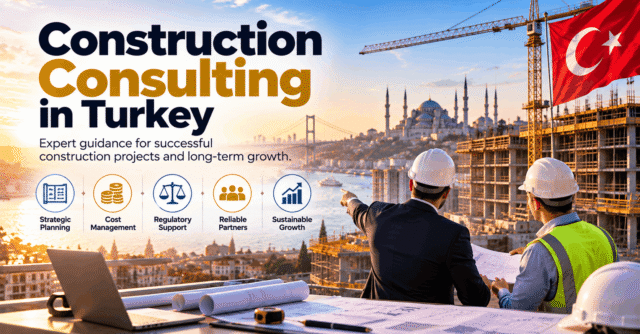
A construction project can create new business opportunities, increase property value, and support long-term growth. However, poor planning, rising costs, legal delays, and weak project management can quickly turn a promising investment into a costly mistake. This is why construction consulting in Turkey matters.
Whether you plan to build a commercial property, develop infrastructure, or enter Turkey’s construction market, the right strategy can help you make informed decisions and manage risks before they affect your budget.
Turkey offers opportunities for local and international investors. Yet, every project needs careful planning, reliable partners, and a clear understanding of the local business environment.
With support from Ottoman Services, businesses can approach construction projects with greater confidence and a structured plan for growth.
What Is Construction Consulting in Turkey?
Construction consulting helps businesses plan, assess, and manage construction projects. It focuses on the business decisions that influence project costs, timelines, risks, and expected results.
A construction consultant can help investors assess opportunities, review project plans, compare potential contractors, and identify issues before construction begins.
Consultants may also support budgeting, risk management, supplier selection, and project performance reviews.
For international investors, construction consulting in Turkey can also help explain local business practices and identify questions that require advice from qualified Turkish legal, engineering, tax, or regulatory professionals.
The goal is simple: make better decisions before committing significant time and money.
Why Construction Projects Need a Clear Strategy
A successful project starts long before work begins on-site. Businesses must understand what they want to build, why the project matters, and whether the expected benefits justify the investment.
A clear construction strategy in Turkey should cover several key areas.
1. Define the Project’s Purpose
Start by identifying the project’s main objective. Is it intended to generate rental income, support business operations, expand production, or create a property for resale? Your objective will influence the location, design, budget, and expected return.
For example, a warehouse development may require strong transport links, while a retail property may depend more on customer access and local demand.
2. Assess Market Demand
Market research helps investors understand whether a proposed project meets a real need. Review the target location, customer demand, competing developments, infrastructure access, and local economic conditions. Do not rely only on optimistic sales forecasts.
Compare different scenarios, including slower demand, higher costs, and longer completion times.
3. Establish a Realistic Budget
A construction budget should include more than land and building costs. Consider design fees, permits, professional services, materials, labor, insurance, financing, taxes, and ongoing operating expenses. It is also wise to plan for unexpected costs.
A realistic budget gives decision-makers a clearer view of the capital required and reduces the chance of funding problems during construction.
Understanding Construction Risks in Turkey
Every construction project involves risk.
The key is to identify major problems early and establish practical ways to manage them.
Financial and Cost Risks
Changes in material prices, labor costs, exchange rates, and financing expenses can affect the final project cost. These factors may be especially important for foreign investors who fund projects in one currency but pay expenses in another. To manage these risks, prepare a detailed budget, review supplier quotations, and update cost forecasts throughout the project.
Keep sufficient financial flexibility to respond to unexpected expenses.
Legal and Regulatory Risks
Construction projects must comply with applicable planning, building, safety, environmental, and permit requirements. The rules that apply depend on the project’s location, type, and scope. Before committing to a site, confirm land ownership, permitted use, planning conditions, and required approvals.
Work with qualified local professionals to verify the relevant requirements.
Turkey’s Ministry of Environment, Urbanization and Climate Change provides official information on construction-related rules and public guidance through its official website.
Contractor and Supplier Risks
Choosing a contractor based only on the lowest quotation can create problems later. Delays, poor workmanship, weak financial capacity, and unclear responsibilities can increase costs. Review each contractor’s relevant experience, references, financial position, proposed schedule, and quality-control process.
Contracts should clearly define deliverables, payment terms, deadlines, responsibilities, and procedures for resolving disputes.
Project Delivery Risks
A project may face delays when design decisions, approvals, materials, and contractors are not coordinated properly. Create a realistic project schedule with clear milestones. Assign responsibilities to the right people and establish regular reporting.
When delays occur, investigate the cause and agree on corrective actions rather than waiting for the problem to grow.
How Construction Consulting Supports Project Delivery
Strong project delivery requires coordination between planning, finances, suppliers, contractors, and decision-makers.
Construction consulting can help businesses establish a practical framework for managing these activities.
- Project planning: Consultants can help define objectives, review assumptions, and establish realistic budgets and timelines.
- Risk assessment: Early reviews can identify financial, operational, legal, and supply-chain risks that need further investigation.
- Contractor evaluation: Businesses can compare proposals against agreed criteria, including experience, capacity, cost, and delivery plans.
- Performance monitoring: Regular reviews of spending, milestones, and project changes help management identify problems before they become more expensive.
- Decision support: Clear reports help business owners understand project progress and decide when to adjust budgets, timelines, or priorities.
The precise services required will depend on the project.
Technical design approval, structural assessments, statutory inspections, and other regulated activities should be handled by appropriately qualified professionals.
Business Expansion in Turkey Through Construction Investment
Construction can support business expansion in Turkey when it is connected to a clear commercial objective.
For example, a manufacturer may need a new facility to increase production. A logistics company may require warehouse space near major transport routes. A property investor may consider a commercial development based on local demand.
Before investing, businesses should evaluate the location, expected demand, operating costs, access to suppliers, and long-term financial requirements.
Foreign companies should also consider how they will establish local partnerships, manage contracts, and coordinate with Turkish service providers.
Understanding local business practices can make market entry more structured and help reduce avoidable mistakes.
Ottoman Services can support strategic decision-making by helping businesses assess opportunities, review commercial considerations, and develop a clearer approach to business expansion in Turkey.
Why Business Valuation in Turkey Matters for Construction Projects
Construction investments should be assessed according to their potential financial value, not simply their building cost.
Business valuation in Turkey can help investors estimate what a business or investment may be worth.
It can be particularly useful when purchasing a construction company, investing in a property-related business, assessing a joint venture, or considering a merger or acquisition.
Valuation may consider expected cash flow, assets, liabilities, market comparisons, and future business performance. The appropriate method depends on the type of investment and the available information.
For construction-related businesses, investors should also review outstanding contracts, payment obligations, debt, project backlogs, equipment, and potential legal disputes.
A careful valuation helps investors compare opportunities and understand whether the expected return justifies the risk.
It does not guarantee future profits, so assumptions should be tested against different market conditions.
A Practical Framework for Better Construction Decisions
Businesses can improve project readiness by following a structured process.
- Define the objective. Identify the project’s commercial purpose, expected benefits, and success measures.
- Research the market. Assess demand, location, competitors, and relevant business opportunities.
- Review feasibility. Estimate costs, funding needs, expected returns, and possible risks.
- Verify requirements. Obtain advice on land, permits, contracts, safety, and regulatory obligations.
- Select suitable partners. Evaluate contractors, suppliers, consultants, and other service providers.
- Monitor delivery. Track progress, costs, quality, and deadlines against the approved plan.
- Review performance. Compare actual results with the original business case and identify lessons for future projects.
This framework gives business owners a consistent way to evaluate opportunities and make informed decisions at every stage.
People Also Ask: Construction Consulting in Turkey
What does a construction consultant do?
A construction consultant helps clients plan projects, evaluate costs, assess risks, compare contractors, and monitor delivery. Depending on their qualifications and scope, consultants may also provide technical or project-management services.
Is Turkey a good place for construction investment?
Turkey may offer opportunities in commercial property, industrial facilities, housing, and infrastructure-related development. However, the suitability of an investment depends on location, demand, financing, regulatory requirements, and project-specific risks. Investors should conduct thorough due diligence before committing funds.
How can I reduce construction costs in Turkey?
Start with a detailed budget, clear project specifications, competitive supplier quotations, and careful contractor selection. Monitor spending regularly and assess proposed changes before approving them. Cutting costs without considering safety or quality can create larger expenses later.
What are the main risks of construction projects?
Common risks include cost increases, delays, permit issues, contractor disputes, design changes, material shortages, and unexpected site conditions. Early risk assessment, clear contracts, and regular progress reviews can help reduce their impact.
Do foreign investors need local support for construction projects in Turkey?
Local support can help foreign investors understand business practices, coordinate with service providers, and identify legal or regulatory questions. The level of support needed depends on the project. Qualified local legal, tax, and technical professionals should address matters within their areas of expertise.
How do I evaluate a construction investment before committing?
Review market demand, project costs, funding requirements, expected cash flow, contractor capacity, legal obligations, and potential risks. For an acquisition or investment in a construction-related business, business valuation in Turkey can help assess the opportunity’s financial worth.
Frequently Asked Questions
1. When should I hire a construction consultant?
Ideally, involve a consultant during the early planning stage. Early input can help identify risks, test assumptions, and improve decisions before major expenses are incurred.
2. Can construction consulting help with business expansion in Turkey?
Yes. It can help businesses assess development opportunities, plan project budgets, evaluate partners, and align construction decisions with their wider expansion strategy.
3. What should I check before hiring a contractor?
Review relevant experience, references, financial capacity, insurance where applicable, proposed costs, project schedules, contract terms, and quality-control procedures.
4. Why is risk management important in construction?
Risk management helps businesses identify potential problems early, prepare responses, protect budgets, and reduce the likelihood of avoidable delays.
5. How does business valuation support construction investment?
Business valuation helps investors assess the financial worth of a company or investment by examining factors such as assets, liabilities, expected cash flow, and market conditions.
6. Can Ottoman Services support construction-related business decisions?
Ottoman Services provides business consulting and strategic advisory support. Depending on your needs, we can help you assess commercial opportunities, evaluate business risks, and plan your approach to investment and expansion. Technical engineering and regulated construction services should be provided by qualified specialists.
Plan Your Next Construction Investment with Ottoman Services
A successful construction project begins with informed decisions, realistic financial planning, and a clear strategy for managing risk. Whether you are exploring a new development, evaluating an investment, or planning business expansion in Turkey, preparation can help you move forward with greater confidence. Ottoman Services helps businesses assess opportunities and develop practical strategies for growth.
Book a consultation with Ottoman Services to discuss your objectives, evaluate your options, and build a more informed plan for your next business or construction investment in Turkey.