
Prepared by Dr. Muhammad Ali Shahzad
Ottoman Advisory & Research
Market Review 2026 ; 21 September 2026
Scope of the Review
This review examines Istanbul’s institutional and large-ticket real estate market, with primary attention to investments generally above USD 3 million. Rather than ranking districts or asset classes, the report evaluates the economic, geographic and market forces shaping investment opportunities across hospitality, offices, logistics and industrial property, retail and F&B, healthcare, development land and selected scarcity assets.
The analysis is designed primarily for family offices, private investment companies, institutional investors, developers and international investors seeking a practical understanding of Istanbul beyond headline property prices.
1. Executive Summary
Istanbul enters the latter part of 2026 with a large and diversified real estate market shaped by both opportunity and selectivity. For institutional investors, family offices and private capital, the central question is no longer simply whether property values are rising, but which assets can convert location, economic demand and scarcity into sustainable income, capital protection and future liquidity.
Commercial property values continue to increase strongly in nominal terms. Türkiye’s Commercial Property Price Index rose 29.4% year-on-year in Q2 2026, although it declined 2.2% in real terms after adjustment for inflation. This divergence is important: nominal appreciation should not automatically be interpreted as real investment performance.
The wider macroeconomic environment remains demanding. Annual consumer inflation stood at 31.51% in August 2026, while the Central Bank maintained its policy rate at 37% in September 2026. High financing costs increase the importance of disciplined acquisition pricing, sustainable rental income and realistic development assumptions. They may also create a different competitive environment for patient equity capital compared with highly leveraged investors.
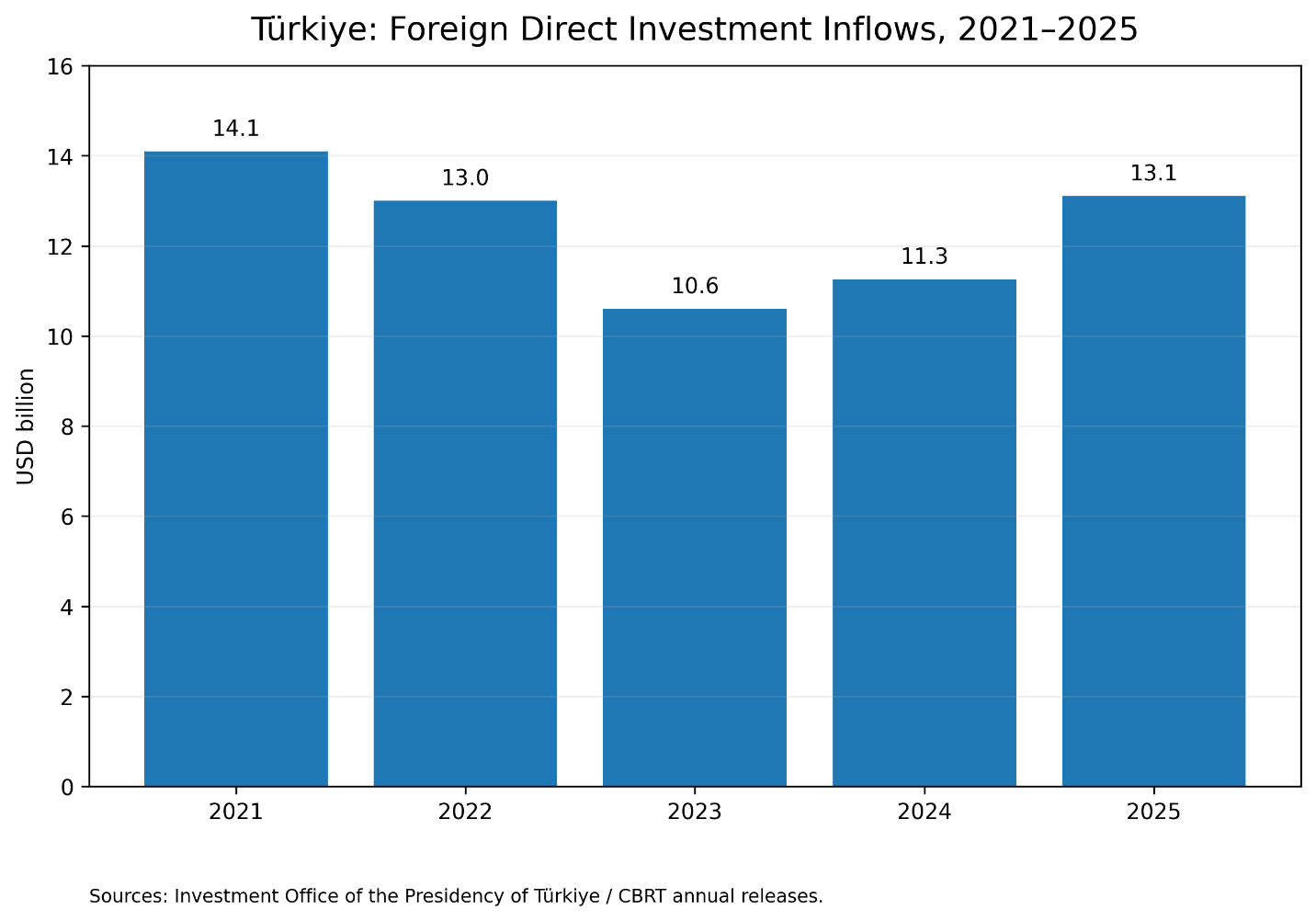
At the same time, Türkiye continues to attract international investment. FDI reached approximately USD 13.1 billion in 2025, while new incentives for qualifying financial services, international service centres and export-oriented activities have strengthened Istanbul’s potential as a regional business platform. The Istanbul Financial Center is particularly relevant to this trend, supporting the development of Ataşehir as a financial, fintech and professional-services cluster.
The significance for real estate extends beyond direct foreign property purchases. Finance and technology generate office demand; export-oriented manufacturing and e-commerce support industrial and logistics facilities; tourism creates hospitality demand; healthcare supports specialist property and accommodation; while Istanbul’s large consumer economy sustains retail, restaurants and an increasingly visible café culture.
These economic drivers are also changing Istanbul’s investment geography.
Traditional business and tourism centres such as Levent–Maslak, Taksim, Beyoğlu and Sultanahmet remain important, but infrastructure and major public investment are creating additional demand nodes. Kağıthane is increasingly connected to business and hospitality demand through direct airport and central-city metro access. Başakşehir combines major healthcare infrastructure with a growing urban catchment. Arnavutköy is developing around Istanbul Airport, logistics and transport connectivity. On the Asian side, Ataşehir is becoming increasingly associated with financial services and the Istanbul Financial Center.
Industrial and logistics investment is even more geographically concentrated. Gebze, Tuzla and Esenyurt–Kıraç represent major production and distribution clusters within the Greater Istanbul economy. Modern logistics space remains relatively constrained, while reported logistics and industrial yields reached approximately 9% in H1 2026. However, investment performance within these markets depends heavily on tenant quality, building specification, transport access and long-term reletting potential.
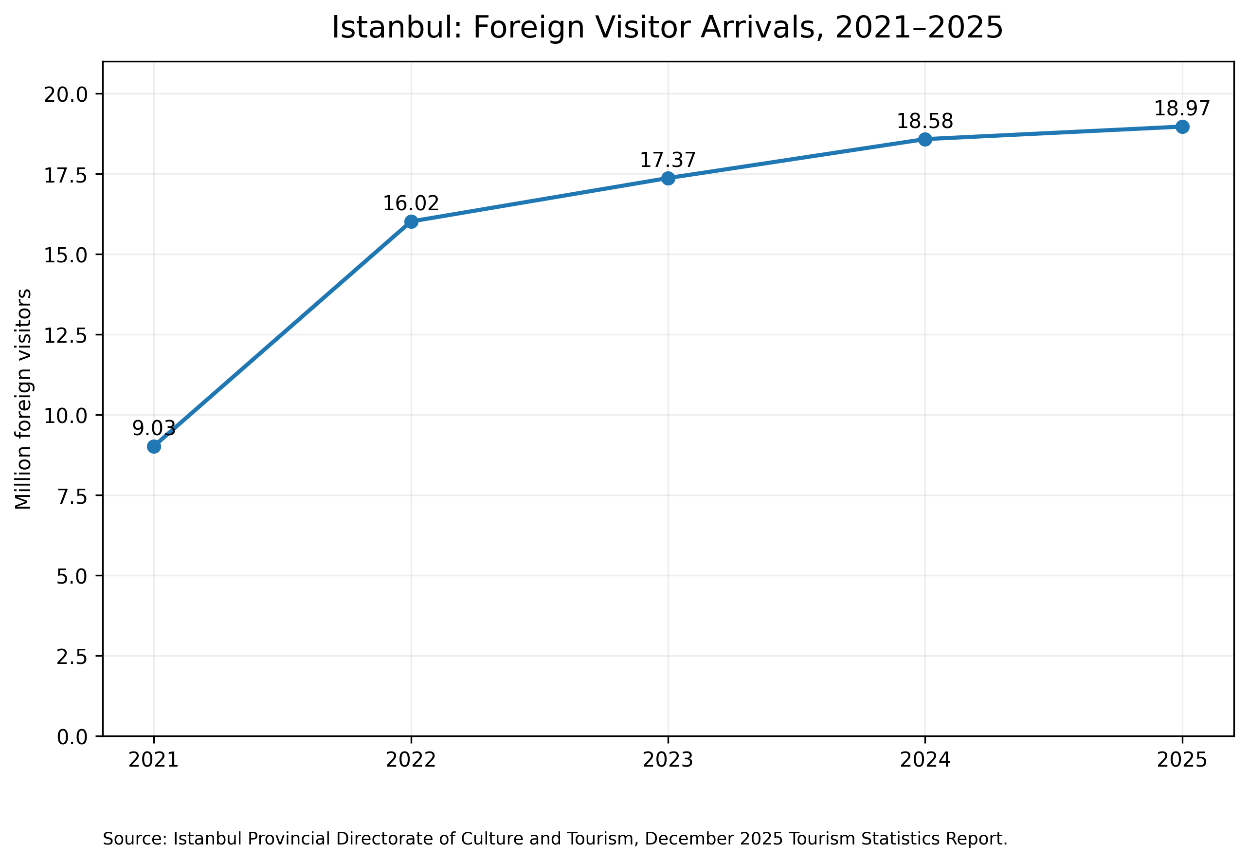
Hospitality likewise requires a more differentiated approach. Istanbul welcomed approximately 18.97 million foreign visitors in 2025, while new accommodation capacity continues to enter the market. Yet the investment characteristics of a heritage hotel in Sultanahmet, a business-oriented hotel in Kağıthane, an airport-linked property in the north-western corridor and healthcare-related accommodation in Başakşehir are fundamentally different.
The same principle applies across offices, retail, healthcare, development land and trophy assets. Istanbul should therefore not be treated as one homogeneous real estate market.
This review adopts a Sector × Geography approach:
Economic driver → geographic concentration → real estate demand → asset characteristics → investor considerations.
It does not rank districts or identify a universal “best” investment. Instead, it provides investors with the evidence and analytical framework needed to evaluate opportunities according to their own capital structure, risk tolerance, investment horizon and strategic objectives.
The central proposition of this review is therefore:
In Istanbul’s 2026 large-ticket market, durable investment value is increasingly determined not by nominal price appreciation alone, but by the alignment of economic demand, geography, asset quality, income resilience and future liquidity.
2. Istanbul Investment & Capital Environment 2026
Istanbul’s institutional real estate market in 2026 operates within a complex but gradually stabilising macroeconomic environment. For international investors, the central issue is not whether Türkiye offers economic scale or investment opportunities—it clearly does—but whether individual investments provide sufficient income quality, capital protection and liquidity to compensate for inflation, currency and financing risks.
2.1 Inflation, Monetary Conditions and Financing
Türkiye’s annual consumer inflation declined to 31.51% in August 2026, compared with 32.95% a year earlier. Although this represents continued disinflation, inflation remains sufficiently high to materially influence construction costs, rents, operating expenses, valuations and required returns.
The Central Bank of the Republic of Türkiye maintained its one-week policy rate at 37% on 10 September 2026. The CBRT noted that the underlying inflation trend was declining but also highlighted continuing risks from energy prices and geopolitical developments.
For real estate investors, this environment creates a clear distinction between cash-rich or equity-funded capital and highly leveraged investment strategies. Expensive local financing raises the hurdle rate for acquisitions and new development, while increasing the importance of existing cash flow, tenant strength, construction timing and refinancing assumptions.
The consequence is that nominal property appreciation alone is an insufficient investment argument. Assets must increasingly be assessed against inflation, financing costs and potential currency movements.
2.2 Foreign Direct Investment: Recovery, but Not the End of Risk
Türkiye attracted approximately USD 13.1 billion of FDI in 2025, representing a 12.2% increase from 2024. Importantly for Istanbul’s real estate demand base, FDI was not concentrated solely in traditional manufacturing. Wholesale and retail activities accounted for around 32% of inflows, manufacturing for 31%, and information and communication for approximately 14%.
These flows matter for real estate because foreign investment generates demand beyond direct property purchases. International companies require offices, logistics facilities, warehouses, technology infrastructure, hotels, executive accommodation, retail space and professional services.
However, stronger FDI should not be interpreted as the disappearance of Türkiye’s investment-risk premium. The IMF’s 2026 assessment recognized progress in reducing macroeconomic imbalances and rebuilding confidence but continued to identify high inflation, external vulnerability and the need for further improvements in productivity, governance and legal frameworks.
For international real estate capital, this creates a market in which opportunity and caution coexist. Pricing, contractual protection, asset liquidity and exit strategy therefore deserve greater attention than in lower-volatility markets.
2.3 Istanbul Financial Center and International Business Functions
Ataşehir’s Istanbul Financial Center represents more than a new office development. It is intended to concentrate financial institutions, regional management functions and international financial-service activity within a dedicated regulatory and business environment.
The incentive framework has become materially stronger in 2026. For qualifying financial-service exports conducted from the IFC, 100% of eligible earnings may be deducted from the corporate tax base until June 2047, subject to statutory conditions. Qualifying service centres can similarly obtain a 100% corporate tax deduction on eligible foreign-derived income for 20 accounting periods, alongside specified employee income-tax advantages. Certain financial transactions and office leases also benefit from stamp-duty and fee exemptions.
These incentives should not be described as a general tax holiday for all foreign investors. Eligibility depends upon the nature of the company, activity, revenue source and other statutory conditions.
Nevertheless, they strengthen the strategic case for Istanbul—particularly Ataşehir—as a potential location for regional financial, treasury, fintech and corporate-service operations.
2.4 Broader Investment Incentives
Türkiye’s investment regime also provides project-specific support beyond the Financial Center. Depending on sector, location, scale and qualification, available instruments can include VAT and customs-duty exemptions, corporate-tax reductions, social-security support, interest support, land allocation, R&D incentives and other project-based mechanisms. In 2025, 432 investment incentive certificates were issued to international investors, representing TRY 109.5 billion of investment and planned employment for approximately 16,700 people.
This is particularly relevant to manufacturing, technology, export-oriented activities and certain large development projects. For investors, however, incentives should be incorporated only after confirming project-specific eligibility; they should not form the primary investment thesis.
2.5 Implications for Private and Institutional Capital
Istanbul’s 2026 capital environment therefore presents neither a simple high-growth story nor a purely defensive investment case.
Its attraction comes from the combination of a large metropolitan economy, international connectivity, deep consumer demand, an export-oriented industrial base, tourism, expanding financial and technology ecosystems and selective government incentives.
Its constraints remain equally important: elevated financing costs, inflation, currency exposure, regulatory complexity and the need for disciplined exit planning.
For family offices and private capital, this environment may favour transactions where flexibility, patient equity and local market knowledge create an advantage. For institutional capital, investability is more likely to depend on transparent ownership, professional management, tenant quality, predictable cash flow, technical due diligence and credible exit liquidity.
The relevant investment question is therefore not simply whether Istanbul is attractive. It is:
Which Istanbul asset, serving which economic activity, in which location, at which entry price and under which ownership and income structure provides an acceptable risk-adjusted investment proposition?
This question provides the bridge to the following sections of the review.
3. Economic & Sectoral Drivers of Real Estate Demand
Istanbul’s institutional real estate market is supported by a diversified metropolitan economy rather than a single demand source. Finance, technology, international trade, manufacturing, logistics, tourism, healthcare and consumer services each generate different forms of occupier demand. For investors, understanding these economic drivers is important because sustainable property performance ultimately depends on the businesses, employees, visitors and consumers using the underlying space.
3.1 Financial Services, Fintech and the Expanding Services Economy
Financial services remain one of Istanbul’s most important high-value economic functions, reinforced by the development of the Istanbul Financial Center and Türkiye’s expanding fintech ecosystem.
Türkiye’s fintech sector attracted approximately USD 220 million across 39 transactions in 2025, placing it among the country’s most active technology-investment categories. The ecosystem increasingly extends beyond consumer payment applications into B2B finance, open banking, regtech, digital banking, fraud prevention and cross-border financial infrastructure.
The Istanbul Financial Center is intended to deepen this ecosystem by bringing banks, financial institutions and technology companies into closer proximity, while its Fintech Center is designed to support regulatory sandboxes and collaboration between established financial institutions and startups. A government-backed “One-Stop-Shop” for investors and companies also became operational at the IFC in May 2026.
Real estate implication: financial and fintech expansion supports demand for modern offices, flexible workspace, executive accommodation, hospitality, retail and supporting professional services, particularly where high-quality infrastructure and skilled labour are accessible.
3.2 Technology, Software and Exportable Business Services
Istanbul is also increasingly exposed to economic activity that does not depend on physical goods production. Türkiye’s exports of telecommunications, computer and information services reached approximately USD 6.7 billion in 2025, up from USD 5.4 billion in 2024. Total services exports reached approximately USD 124.9 billion.
This matters for commercial real estate because technology and professional-service companies typically place greater emphasis on connectivity, talent access, modern building specifications and adaptable working environments than on traditional central-business-district prestige alone.
The growing digital economy can therefore support several property formats: Class A offices, smaller flexible offices, mixed-use projects and buildings capable of accommodating technology-oriented tenants.
3.3 Trade, Export-Oriented Industry and Logistics
Istanbul remains deeply connected to Türkiye’s export economy. It ranked first among Turkish provinces for merchandise exports in 2025. In December alone, companies operating from Istanbul exported approximately USD 5.69 billion, equivalent to about 21.5% of Türkiye’s monthly goods exports.
The broader Marmara economy further strengthens this position through manufacturing concentrations in neighboring Kocaeli, Tekirdağ, Bursa and other industrial centres.
Digital commerce is adding another source of distribution demand. Türkiye’s e-commerce volume exceeded TRY 4.57 trillion in 2025, increasing 52.2% year-on-year, while its US-dollar value reached approximately USD 115.4 billion.
These trends translate directly into requirements for warehousing, fulfilment facilities, production buildings, distribution centres and transportation-linked land. Importantly, logistics demand is geographically selective. Colliers reported continued shortage of modern facilities in H1 2026, particularly for buildings below 10,000 m² and above 25,000 m².
Real estate implication: industrial and logistics investment should be evaluated through connectivity to ports, motorways, airports, production centres and consumer markets rather than through Istanbul-wide averages.
3.4 Tourism, Aviation and Hospitality
Tourism remains one of Istanbul’s strongest sources of internationally generated property demand.
Istanbul received approximately 18.97 million foreign visitors in 2025, compared with 18.58 million in 2024. The positive momentum continued into 2026: January arrivals reached approximately 1.36 million, an increase of 7.18% year-on-year.
At national level, Türkiye generated approximately USD 65.2 billion from tourism in 2025, demonstrating the economic scale of the visitor economy.
For Istanbul, however, the investment significance extends beyond visitor numbers. Airport expansion, metro connectivity, business travel, medical tourism and the development of new commercial districts are gradually broadening the geography of accommodation demand beyond the historic tourism core.
This creates opportunities not only for conventional hotels, but also for branded serviced accommodation, extended-stay concepts, airport-oriented hotels and selected mixed-use hospitality projects.
3.5 Healthcare and International Patient Demand
Healthcare represents another important intersection between service exports and real estate.
Türkiye hosted approximately 1.4 million international health visitors in 2025, while combined education and healthcare service exports generated approximately USD 6.2 billion. In 2024 alone, health-service exports had generated around USD 3 billion from approximately 1.5 million health tourists.
Istanbul is a major beneficiary because of its concentration of private hospitals, university hospitals, specialist clinics, international connectivity and accommodation infrastructure.
For property investors, healthcare-related demand extends beyond hospitals themselves. It may support medical office buildings, rehabilitation facilities, patient accommodation, accompanying-family lodging and hospitality around established medical clusters.
The sector nevertheless requires specialist analysis because healthcare real estate depends heavily on operator quality, licensing, medical infrastructure and long-term operating viability.
3.6 Consumer Economy, Retail and the Café Phenomenon
Istanbul’s large local population and international visitor base also create substantial demand for retail and food-and-beverage space. One particularly visible example is the rapid development of specialist coffee shops and café chains.
Euromonitor reports that chained specialist coffee and tea outlets continued expanding in Türkiye during 2025. Starbucks remained the largest café/bar operator by value sales, while newer brands including Juan Valdez and EspressoLab expanded rapidly. The market is expected to continue growing, supported by demand for premium experiences, takeaway formats and café-led social consumption.
This trend should not be interpreted simply as a “coffee investment opportunity.” Its importance to real estate lies in what it reveals about urban consumption patterns. Cafés increasingly compete for prominent ground-floor units, pedestrian locations and neighborhood centres, often contributing to the commercial activation of mixed-use and residential districts.
For investors in street retail, therefore, footfall, frontage, surrounding demographics, tourism exposure and tenant sustainability may be more informative than district-level average rents alone.
3.7 From Economic Growth to Property Demand
These sectors demonstrate why Istanbul should not be analyzed solely through property-price data.
Different economic activities require different forms of space:
Finance and fintech generate office and business-service demand; technology creates flexible and talent-oriented workspace requirements; exports and e-commerce drive logistics and industrial demand; tourism supports hospitality; healthcare creates specialized real estate requirements; and the consumer economy sustains retail and F&B space.
The investment challenge is determining where these economic drivers are translating into durable real estate demand.
That geographic question forms the basis of the next section: Istanbul’s Sector × Geography Investment Landscape.
4. Sector × Geography Investment Landscape & Asset-Class Review
In Istanbul, asset class alone does not define an investment opportunity. Geography, infrastructure, surrounding economic activity and the quality of the individual property are equally important.
A hotel in Sultanahmet serves a different demand base from a hotel in Kağıthane; an office building in Levent operates within a different ecosystem from one in Ataşehir; and a warehouse in Tuzla cannot be evaluated using the same assumptions as industrial property in Esenyurt–Kıraç or Gebze.
The institutional market should therefore be understood through the intersection of sector and geography, rather than through city-wide averages or district rankings.
4.1 Sector × Geography Investment Matrix
| Sector / Asset | Key geography | Main demand driver | Market character | Key investor considerations |
|---|---|---|---|---|
| Finance/ Offices | Ataşehir / IFC | Finance, fintech, regional services | Expanding institutional cluster | Absorption, tenant quality, incentives, new supply |
| Corporate Offices | Levent–Maslak–Şişli | Banks, headquarters, professional services | Established corporate market | Building quality, accessibility, lease strength |
| Hospitality | Sultanahmet/ Taksim / Beyoğlu | International tourism | Established visitor market | Occupancy, seasonality, heritage constraints |
| Hospitality/ Mixed-use | Kağıthane | Airport metro, business mobility | Infrastructure-led transition | Hotel positioning, office demand, new supply |
| Healthcare/ Hospitality | Başakşehir | Major hospital infrastructure, population growth | Healthcare-led demand node | Medical travel, hotel demand, operator quality |
| Airport/ Development | Arnavutköy | Istanbul Airport, metro, logistics | Long-term infrastructure corridor | Zoning, development timing, land risk |
| Logistics/ Industrial | Tuzla–Gebze | Manufacturing, ports, exports | Major industrial corridor | Tenant quality, specifications, transport |
| Logistics/ Industrial | Esenyurt–Kıraç / Hadımköy | Distribution, manufacturing, consumer market | European-side industrial belt | Accessibility, facility quality, congestion |
| Retail / F&B | Nişantaşı, Beşiktaş, Kadıköy, Bağdat Cd., Karaköy | Footfall, lifestyle consumption, tourism | Micro-location driven | Frontage, footfall, tenant sustainability |
| Trophy/ Scarcity | Bosphorus | Scarcity, prestige, private wealth | Limited-supply market | Legal status, restoration, liquidity |
4.1 Finance and Corporate Offices: A Multi-Centre Business Geography
Istanbul’s office geography is increasingly multi-centered. The traditional central business corridor encompassing Levent, Esentepe, Gayrettepe, Şişli and adjoining areas, together with Maslak, remains important because of its concentration of banks, corporate headquarters, professional services, hotels and established transport infrastructure.
However, Ataşehir has introduced a second structural force through the Istanbul Financial Center.
Colliers’ office pipeline analysis illustrates the scale of this geographical shift. In its H1 2025 assessment, approximately 79.6% of the planned Class A office supply expected over the following three years was located in the Kozyatağı/Ataşehir sub-market, compared with 15.9% in the traditional CBD and 4.5% in Maslak. The Istanbul Financial Center accounted for a substantial part of this prospective supply.
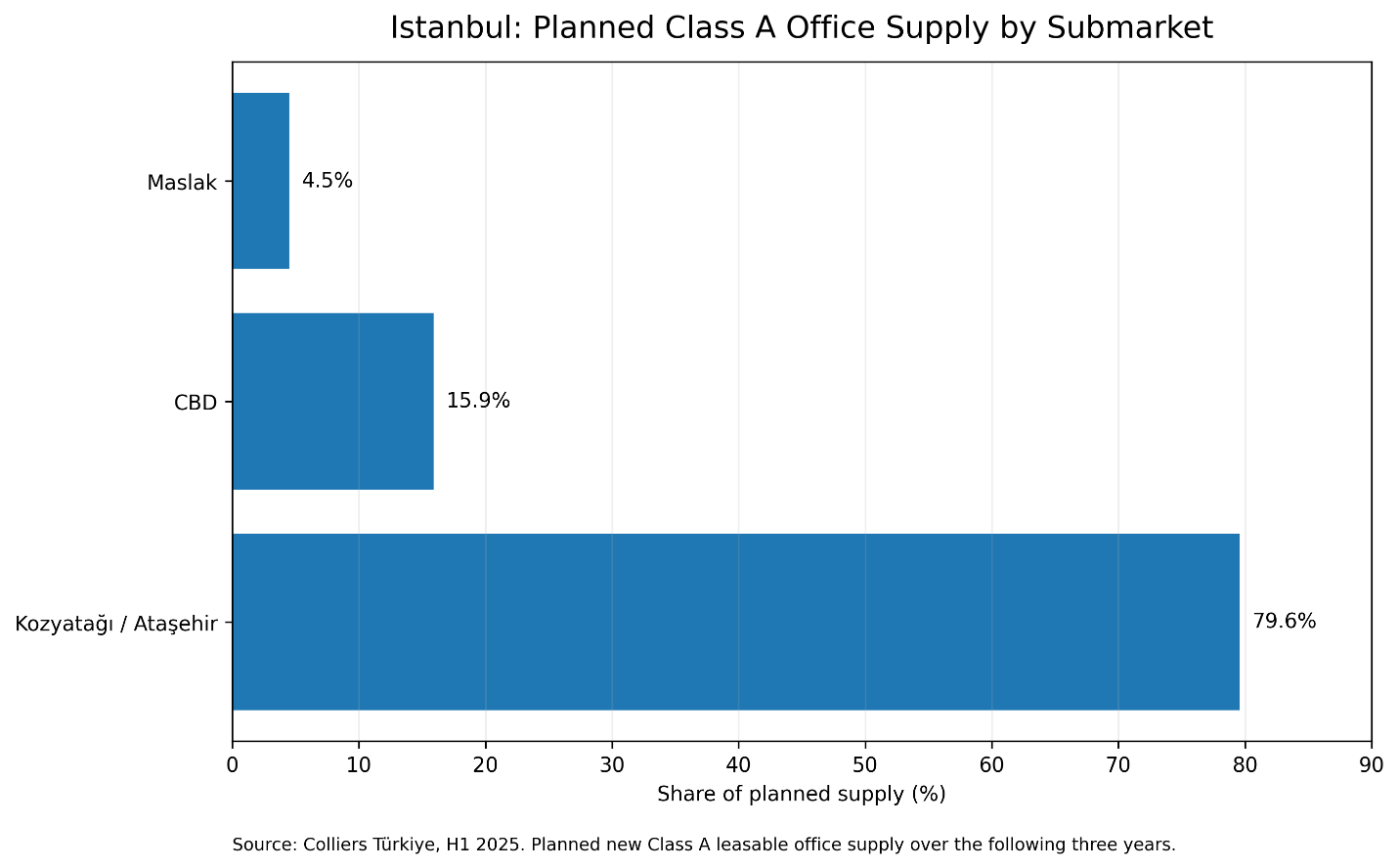
This concentration creates both opportunity and a requirement for selectivity. Large new supply can deepen a business district, attract supporting services and improve institutional visibility, but it can also influence absorption, vacancy and rental competition.
For investors, offices should therefore be assessed building by building. Tenant covenant, lease duration, earthquake resilience, building age, technical specification, transportation access, parking, floor efficiency and alternative-use potential may be more informative than average district rents.
Ataşehir is particularly relevant for investors seeking exposure to financial services, fintech and regional corporate activity. Levent–Maslak remains relevant for established corporate demand and headquarters functions. Neither should be treated as automatically superior to the other; they serve partially different occupier profiles.
4.2 The Airport-Connected North-Western Corridor
One of Istanbul’s most important geographical changes is occurring around the transport network connecting the established city with Istanbul Airport.
The Kağıthane–Istanbul Airport section of the airport metro opened in January 2023, followed by the Kağıthane–Gayrettepe connection in January 2024. The remaining Halkalı–Arnavutköy section entered service in June 2026, completing the wider Gayrettepe–Istanbul Airport–Halkalı connection.
The full line is already carrying significant passenger volumes: on 22 June 2026, shortly after completion of the final section, the corridor recorded more than 53,000 passengers in one day.
This infrastructure changes the investment interpretation of several districts.
Kağıthane
Kağıthane should no longer be considered only as a secondary residential or urban-transformation district. Its direct connection to Istanbul Airport and Gayrettepe places it between the international gateway and Istanbul’s established business core.
This supports a broader investment profile involving business hotels, serviced accommodation, offices, mixed-use development and street-level commercial uses.
Hospitality in Kağıthane should nevertheless be analyzed differently from tourist hotels in Sultanahmet or Taksim. Its potential demand base is more closely connected to business mobility, airport access, corporate visitors and short-duration city stays.
Başakşehir
Başakşehir represents another form of demand concentration.
The Başakşehir Çam and Sakura City Hospital has 2,755 beds, 90 operating rooms and extensive specialist infrastructure, placing a major healthcare institution within the district. It is also connected to the metro network and lies approximately 30 kilometers from Istanbul Airport.
For real estate, the significance extends beyond the hospital asset itself. Large healthcare clusters can create secondary requirements for hotels, extended-stay accommodation, patient-family lodging, medical offices, retail, food services and supporting commercial activity.
The investment case therefore depends on understanding healthcare-generated demand, rather than assuming that conventional tourist-hotel economics apply.
Arnavutköy and the Airport Corridor
Arnavutköy’s strategic importance arises from Istanbul Airport, improved rail connectivity and access to the wider northern transport system.
The Arnavutköy–Airport connection opened in 2024, while the Halkalı–Arnavutköy section completed the broader metro corridor in June 2026.
This creates a longer-term investment landscape covering airport hospitality, logistics, commercial development and selected land opportunities.
However, land investment around major infrastructure requires particular caution. Planning status, zoning, infrastructure provision, environmental restrictions, permitted density and realistic development timelines must be verified at parcel level. Infrastructure proximity by itself does not establish investment value.
4.3 Industrial and Logistics Corridors
Industrial and logistics real estate is perhaps the clearest example of why Istanbul-wide averages can be misleading.
The market extends beyond the administrative boundary of Istanbul into the wider Marmara production and logistics system.
Colliers’ detailed industrial-market data showed approximately 33% of Greater Istanbul industrial stock concentrated in Gebze, 28% in Esenyurt–Kıraç and 17% in Tuzla in H1 2025. These three clusters therefore represented almost four-fifths of the measured stock.
Share of industrial stock in the latest detailed public cluster breakdown, H1 2025
The 2026 market has remained supportive for quality logistics assets. Demand is particularly concentrated in modern facilities below 10,000 m² and above 25,000 m², while logistics and industrial yields increased to approximately 9% in H1 2026.
Tuzla–Gebze
The Tuzla–Gebze corridor benefits from manufacturing concentration, organized industrial activity, motorway access, port connectivity and the broader industrial economy of Kocaeli.
Its investment logic is therefore closely tied to manufacturing, export activity, logistics and long-term corporate occupancy.
For institutional investors, technical factors are critical: clear height, loading capacity, yard space, truck access, fire systems, power availability, building specification and expansion potential can materially affect rentability and exit value.
Esenyurt–Kıraç and the European Industrial Belt
Esenyurt–Kıraç serves Istanbul’s large European-side population and manufacturing/distribution economy. Its logistics relevance is reinforced by motorway connections and proximity to major consumption centres.
Further west and north-west, Hadımköy and the wider industrial belt interact increasingly with the airport, Northern Marmara transport system and Istanbul’s outward urban expansion.
Again, geography alone is insufficient. Modern institutional-quality facilities and older industrial buildings can perform very differently even within the same industrial zone.
4.4 Hospitality: From Historic Core to Multiple Demand Nodes
Istanbul’s hospitality market remains anchored by globally recognized tourism districts.
Sultanahmet and the Historic Peninsula derive demand from cultural tourism and proximity to major heritage attractions. Taksim, Beyoğlu, Beşiktaş and parts of the Bosphorus corridor combine leisure tourism, business travel, nightlife, retail and international visibility.
These remain fundamentally different hospitality markets from the airport-connected districts discussed above.
The key change is therefore not the disappearance of Istanbul’s traditional tourism core. It is the emergence of additional demand nodes.
Hospitality investors should distinguish among at least four demand profiles: heritage tourism, urban leisure and business tourism, airport/business mobility, and healthcare-related accommodation.
This distinction affects suitable hotel category, average length of stay, seasonality, food-and-beverage requirements, room size, branding strategy and development economics.
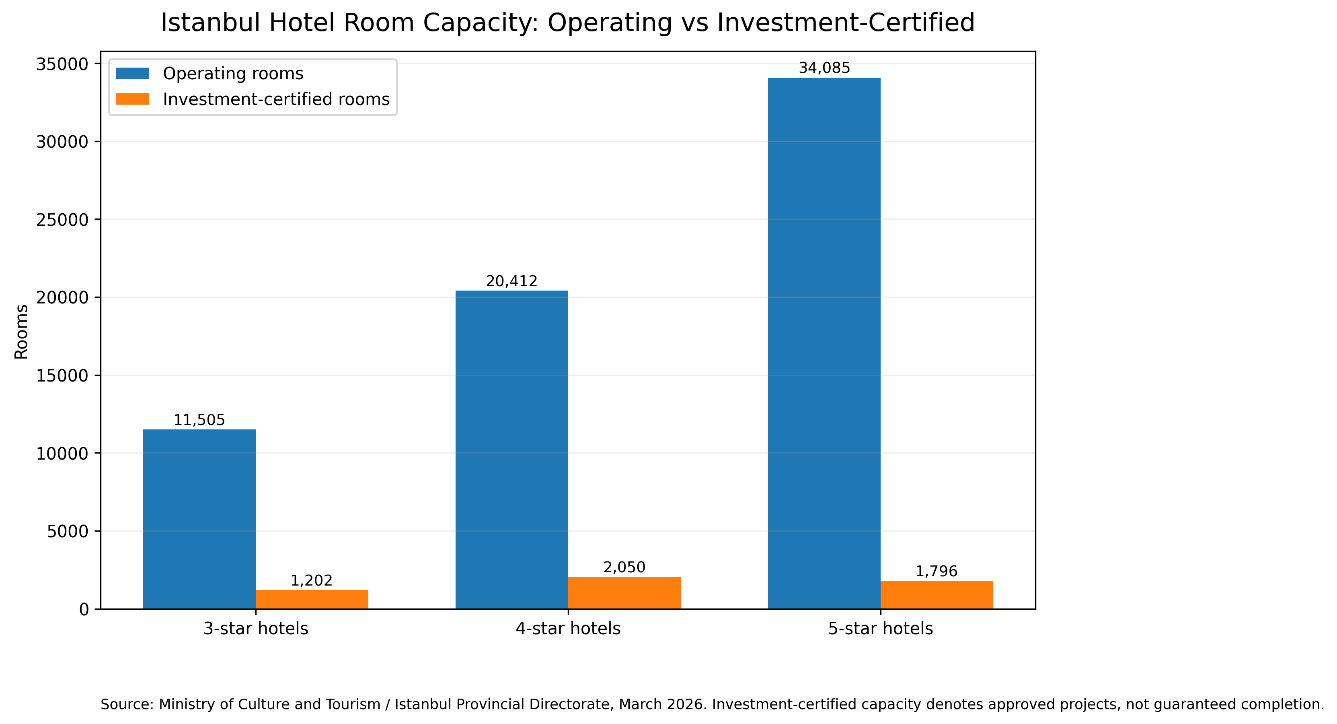
Accordingly, Istanbul hotel investments should be analyzed through demand source and catchment area, rather than city-wide occupancy alone.
4.5 Retail, F&B and the Importance of Micro-Location
Retail is even more dependent on micro-location.
Major shopping centres remain institutional investment assets, but Istanbul’s active street-retail economy creates another category of opportunity in districts such as Nişantaşı, Bağdat Avenue, Kadıköy, Beşiktaş, Karaköy and selected tourist and mixed-use areas.
The growth of branded cafés and specialist coffee operators discussed in Part 3 illustrates this changing urban consumption economy.
For such assets, conventional district-level pricing data is insufficient. A unit’s frontage, pedestrian visibility, pavement width, neighbouring brands, public transport, office population, tourism exposure and daily footfall can determine commercial performance.
This means that two properties separated by only a few hundred metres may possess materially different investment characteristics.
For family offices considering retail assets, tenant quality and sustainable occupancy cost deserve particular attention. A high headline rent is not necessarily valuable if tenant turnover is excessive or the underlying business cannot sustain the rent.
4.6 Healthcare Real Estate
Healthcare-related real estate occupies a smaller but strategically important part of Istanbul’s institutional market.
The opportunity extends from hospitals and medical buildings to specialist clinics, rehabilitation facilities and accommodation supporting international and domestic patients.
Unlike ordinary commercial real estate, however, healthcare properties are strongly linked to operator competence, licensing, specialist building requirements and medical-service economics.
For this reason, the strongest real estate location is not necessarily the strongest healthcare investment. Investors must evaluate operator and property together.
Başakşehir is particularly notable because of the scale of its public healthcare infrastructure, while established private healthcare networks in more central and Asian-side districts create different investment environments.
4.7 Development Land and Mixed-Use Opportunities
Land remains one of Istanbul’s most complex large-ticket asset classes.
Infrastructure expansion, urban transformation and changing economic geography can create significant development opportunities, particularly around new transport corridors and expanding business districts.
At the same time, land carries some of the highest planning and execution risks.
Institutional analysis should therefore consider zoning, permitted use, floor-area ratio, title restrictions, infrastructure, construction economics, project timing and likely end-user demand before attributing value to expected future development.
The distinction between strategically located developable land and speculative land dependent on future planning changes is fundamental.
4.8 Bosphorus, Historic and Trophy Assets
Bosphorus waterfront properties, yalı, historic mansions, palaces and exceptional villas form a separate investment category.
Their economics cannot be interpreted through ordinary rental yields or district-level price averages. Scarcity, architectural significance, waterfront position, restoration status, legal restrictions and buyer depth play a much larger role.
These assets may appeal particularly to private wealth seeking prestige, scarcity and long-duration capital preservation rather than conventional institutional income.
Due diligence is especially important because historic-property restrictions, restoration obligations and title or usage issues can materially affect both cost and liquidity.
4.9 Investment Interpretation
The geographic analysis demonstrates that Istanbul is not one institutional real estate market but a network of specialized sub-markets.
Ataşehir is increasingly linked to finance; Levent–Maslak to established corporate activity; Kağıthane to airport-connected urban business demand; Başakşehir to healthcare and new urban infrastructure; Arnavutköy to aviation-linked development; Tuzla–Gebze and Esenyurt–Kıraç to industrial and logistics activity; the Historic Peninsula and Taksim/Beyoğlu to international tourism; and the Bosphorus to scarcity-driven private capital.
These descriptions are not rankings.
Each geography carries different income characteristics, liquidity, development potential and risk. The role of an institutional market review is therefore not to determine which location an investor should select, but to provide sufficient evidence for the investor to compare those characteristics against their own capital structure, investment horizon and objectives.
The central principle is simple:
In Istanbul, the asset class identifies the market—but geography frequently determines the investment case.
5. Outlook & Investor Perspective 2026–2027
Istanbul enters 2026–2027 with substantial economic depth, changing investment geography and a large underlying property market, but also with conditions that reward selectivity more than broad market exposure.
The next phase of the market is likely to be shaped less by uniform appreciation across Istanbul and more by the interaction of economic activity, infrastructure, asset quality, income durability and capital conditions.
5.1 A Market Moving Toward Greater Selectivity
Türkiye’s disinflation process is continuing, but financial conditions remain restrictive. Annual CPI inflation stood at 31.51% in August 2026, while the CBRT maintained the policy rate at 37% in September. The Central Bank continues to describe monetary policy as tight and identifies energy prices and geopolitical developments as continuing upside risks to inflation.
For real estate, this suggests that the distinction between nominal and real performance will remain important.
High financing costs may continue to restrain highly leveraged acquisitions and speculative development, while investors with patient equity capital may have greater flexibility in negotiating transactions, restructuring assets or entering projects with longer development horizons.
The investment case should therefore increasingly depend upon real operating performance rather than expected nominal price appreciation alone.
5.2 Infrastructure Will Continue to Change Istanbul’s Investment Geography
Istanbul’s traditional investment centres remain important, but new infrastructure is creating additional demand corridors.
The airport rail connection, the Istanbul Financial Center, major healthcare infrastructure and continued metropolitan expansion are gradually changing how hospitality, offices, logistics and supporting commercial property should be geographically assessed.
This does not mean that emerging locations will replace established districts. Instead, Istanbul is becoming a more multi-centred investment market, with individual areas developing increasingly specialised economic functions.
For investors, future analysis should therefore pay close attention to whether new infrastructure is producing measurable occupier demand rather than assuming that infrastructure announcements automatically translate into property value.
5.3 Income Quality May Become More Important Than Headline Yield
The logistics and industrial market demonstrates the value of this distinction. Colliers reported yields of approximately 9% in H1 2026, supported by rental growth and restricted availability of quality facilities. Demand remains particularly evident for modern logistics and production facilities below 10,000 m² and above 25,000 m².
However, even an attractive headline yield should be interpreted alongside tenant covenant, lease duration, building specification, maintenance requirements and future reletting prospects.
The same principle applies across other asset classes.
In offices, Istanbul entered 2026 with relatively weak transaction activity, while Q1 average Class A rents declined from the previous quarter and vacancy remained broadly unchanged. This increases the importance of building quality, tenant strength and micro-location.
In hospitality, occupancy and room rates should be considered together with demand source, operating structure, brand suitability and future room supply.
For institutional and private capital alike, the sustainability of income may ultimately prove more important than the apparent yield at acquisition.
5.4 International Capital: Opportunity with a Higher Due-Diligence Requirement
Istanbul offers several characteristics capable of attracting international capital: a large metropolitan population, international aviation connectivity, tourism, manufacturing and exports, financial services, technology, healthcare and a deep consumer economy.
The Istanbul Financial Center adds another dimension. Qualifying financial-service exports can receive a 100% corporate-tax deduction on eligible earnings until June 2047, while qualifying service centres, international trading activities and certain employment and leasing arrangements can benefit from additional incentives subject to statutory conditions.
Yet international investors should continue to incorporate currency exposure, inflation, financing conditions, legal and tax structuring, regulatory requirements and exit liquidity into transaction underwriting.
The appropriate response to these risks is not necessarily to avoid Istanbul, but to require stronger due diligence and clearer investment structures.
5.5 What Investors Should Monitor Through 2027
Rather than attempting to predict which district or asset class will outperform, this review identifies several indicators that can help investors interpret the direction of the market.
These include the path of inflation and interest rates; TRY exchange-rate stability; FDI and corporate investment; office absorption around Ataşehir and established business districts; hotel arrivals, occupancy and room supply; logistics rents and modern warehouse availability; major infrastructure completion; construction costs; and evidence that emerging districts are generating sustainable occupier demand.
Asset-level factors remain equally important: earthquake resilience, tenant covenant, lease structure, title and zoning status, operating capability, redevelopment potential and realistic exit depth.
5.6 Investor Perspective
Istanbul should ultimately be approached not as a single investment market, but as a portfolio of specialized urban economies.
Its institutional opportunity lies in identifying where economic activity and real estate are genuinely aligned.
For family offices and private investors, flexibility and longer investment horizons may provide access to assets or development situations that institutional structures cannot easily accommodate. Institutional investors, by contrast, may place greater emphasis on predictable income, governance, professional management, technical quality and liquidity.
Neither approach is inherently superior; they represent different capital objectives.
The purpose of this review is therefore not to identify a “best” Istanbul investment. It is to provide a framework through which investors can judge whether a particular asset fits their own return requirements, risk tolerance, holding period and strategic objectives.
The central investment question for Istanbul is no longer simply where property prices may rise. It is where economic demand, geography, asset quality and capital structure combine to create durable investment value.
our report explains what may be driving investable value and what an international investor should examine before committing capital
.
